
Most roof problems announce themselves from inside: a brown ring on the ceiling, a drip during a storm, a damp patch in a closet. For roof repair in Coral Springs, One Call Home Pros arranges the right roofer. One Call is not a roofing company and holds no roofing licence. Describe what you are seeing, and One Call pairs you with a vetted, licensed, insured local roofing professional who repairs tile, shingle and flat roofs. The pro inspects the roof and does the repair. One Call arranges it, vets the pro and stays with the job.
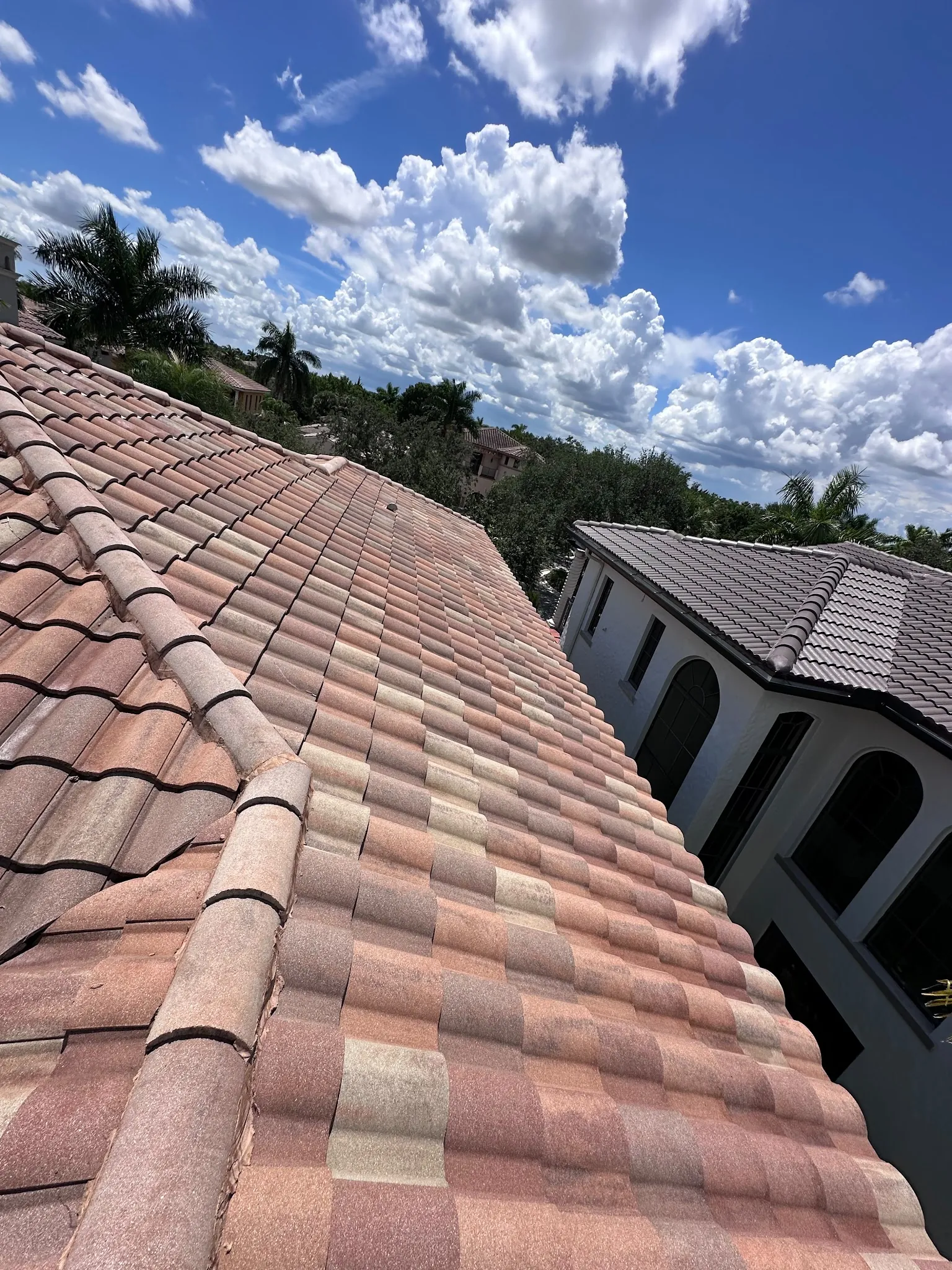

Roofs on a city built in a few decades
Coral Springs grew up mainly in the 1970s, 1980s and 1990s, and a large share of the city’s houses are now at the age where their major parts wear out together. Roofs are part of that picture. A roof that has been through many summers of sun and many storm seasons shows it in cracked tile, worn underlayment, tired flashing and soffits that have started to let water and pests in.
Roofing is closely watched here. The city enforces its building code, larger repairs need a permit, and many associations have rules on roof materials, tile colour and contractor access. A roofing pro who handles roof repair in Coral Springs regularly knows what the city and your association will ask for.
What roof repair covers
Active leaks
Water coming through a ceiling or wall during rain. The pro traces it to its source, which is often not directly above the stain.
Missing and cracked tile
Clay and concrete tiles that have cracked, slipped or blown off, exposing the underlayment beneath.
Lifted shingles
Shingles that wind has lifted, creased or torn away, and shingles that have lost their granules.
Flashing and pipe boots
Metal flashing around walls, chimneys and valleys, and the rubber boots around vent pipes, which crack in the sun.
Soffit and fascia
Rotted or damaged fascia boards and soffit panels at the roof edge, where water and animals find a way in.
Storm and wind damage
Damage after a storm, documented with photos and a written description you can give to your insurer.
If the roof is leaking now
Do not go up on the roof, especially when it is wet or windy. Roofs are dangerous, and tile can break under your weight. From inside, you can limit the damage:
- Move furniture, electronics and anything valuable away from the leak.
- Put a bucket or a container under the drip, and towels around it.
- If water is pooling on a ceiling and it is bulging, keep clear of it and keep others away.
- If water is near light fittings or outlets, switch off that circuit at the panel.
- Take photos of the ceiling, the water and anything damaged, with the date.
After that, contact One Call by phone or through the quote request. Say where the water is coming in and whether it happens with every rain or only in a storm with wind.
Two guides cover the common problems in more detail. The roof leak guide sets out what to check from inside and what to note before the pro arrives, and the storm damage guide covers what to look for from the ground after high wind, and how to record it for your insurer.

Tile, shingle and flat roofs
Each roof type fails in its own way, and the houses in this city carry all three. Knowing which one you have helps when you call about roof repair in Coral Springs, and it shapes how the pro approaches the job.
Tile. Clay and concrete tile roofs are common in South Florida. The tile itself sheds most of the water, but the underlayment beneath does the real waterproofing. A cracked tile can let water reach the underlayment, and once the underlayment is worn, leaks follow. Repair usually means replacing broken tiles and, where needed, the underlayment beneath that section. Matching older tile can take some searching, so ask the pro about it.
Shingle. Asphalt shingles can lift or tear in high wind, and older shingles lose the granules that protect them from the sun. Lifted shingles can often be resealed or replaced individually if the rest of the roof is sound.
Flat sections. Many houses have a flat or low-slope section over a porch, a garage or an addition. Water sits on these longer, and seams and drains are the usual weak points.
How One Call matches you with a roofer
Every roofing repair in Florida is licensed work, and the licence sits with the roofer, never with One Call. Before we choose anyone, we ask what you can see from inside and from the ground, what the roof is made of if you know, and whether a storm came first. Tile, shingle and flat roofs call for different hands, and we match a vetted roofer who is licensed and insured for yours.
The roofer gets on the roof, which you should not, traces the leak and makes the repair. If the next heavy rain shows it is not fixed, tell One Call.
After a storm
High wind lifts shingles and tiles, drives rain under flashing, and throws debris onto the roof. After a storm, look at the roof from the ground, and walk the yard for pieces of tile, shingle or flashing. Check the ceilings, especially in closets and corners, over the following days.
If the roof is open, a temporary cover may be needed before a full repair. Ask the pro whether they can tarp the damaged area. Do not try to do it yourself on a wet or damaged roof.
For insurance, documentation matters. Take your own dated photos from the ground and inside, and keep any debris. Ask the pro for photos from the roof and a written description of what they found and what the repair involves. The pro is not your adjuster, and the claim is between you and your insurer, but clear records make that conversation easier.
Repair or re-roof
Most roof calls end in a repair. Sometimes the pro finds that the underlayment has failed across a large area, or that the roof has been repaired many times and the next leak is only a matter of time. They will tell you. A full re-roof is a different, larger job, and not every roofing pro takes it on. If you reach that point, ask the pro whether they offer it.
Price and permits
You pay One Call for the job, and One Call pays the roofer separately. The cost of roof repair in Coral Springs depends on the roof, the damage and the materials. Before work starts, ask what the price covers. Financing is available; ask about it when you call.
Larger roof repairs need a permit and an inspection, and the licensed pro applies for it. Your association may want to approve the materials, particularly tile colour and profile, before work starts.
Soffit, fascia and the roof edge
The roof edge takes a beating from sun, rain and gutters that overflow. Fascia boards rot, soffit panels crack or come loose, and gaps open up that let water into the eaves and animals into the attic. A roofing pro repairs or replaces the damaged sections and checks the drip edge so water runs off the roof rather than behind the fascia.

Further reading
Plain answers to common questions, before you call:
Questions about roof repair in Coral Springs
Is One Call a roofing company?
No. Roofing is a licensed trade, and the roofer who repairs your roof holds that licence and the insurance. One Call vets the roofer, makes the match and follows the job.
Should I go up and look at the damage?
No. Wet and damaged roofs are dangerous, and tile breaks under foot. Look from the ground, document from inside and leave the roof to the pro.
The stain is not under the damage. Why?
Water runs along the underlayment and the framing before it drips. The pro traces the leak to where it enters, which can be some distance from the stain.
Can you help with my insurance claim?
The claim is between you and your insurer. The pro can give you photos and a written description of the damage and the repair, which your insurer may ask for.
Do I need a full new roof?
Usually not. Most leaks are repairs. If the roof has failed more widely, the pro will tell you, and you can ask whether they offer a re-roof.
How much does roof repair cost?
That depends on the roof type, how far the damage goes and the materials. You pay One Call, and One Call pays the roofer. Ask what the price covers after the inspection, and agree to it before any tile is lifted.
Get the roof looked at
Describe the stain, the drip or the damage, and where the house is. One Call lines up a vetted, licensed roofing professional, in Coral Springs or anywhere else in the county.