
After a storm, checking the roof for storm damage starts on the ground, with a camera. Photograph the house, the yard and the inside ceilings before anything is moved, cleaned up or repaired, because that record is what an insurance claim rests on. Look at the roof from the ground only, keep well away from fallen power lines, and leave climbing and close inspection to a licensed roofer. One Call Home Pros connects you with a vetted, insured local roofer for that inspection and the repair.

The short answer
Wind lifts and tears shingles, cracks and loosens tiles, bends flashing and drives rain under anything that has moved. Flying debris and falling branches break tiles and puncture the deck. Some damage is obvious from the street. Much of it is not, especially under a tile roof, where the underlayment does the waterproofing and cannot be seen from below.
So the order is simple. Stay safe, document everything, report the claim, and get a licensed roofer to inspect.
Stay safe first
Before you look at anything, look for hazards.
- Power lines. Treat every fallen line as live. Stay well away, keep others away and report it to the power company.
- Gas. If you smell gas, leave the house and call the gas utility or 911 from outside.
- Water and electrics. If water is coming through a ceiling near lights or outlets, switch that circuit off at the breaker and keep clear.
- Ceilings. Stay out from under any ceiling that is bulging or sagging.
- Ladders and roofs. Do not climb. Wet tiles and shingles are slippery, tiles break underfoot, and storm damage can leave parts of the deck weak.
Document before anything is touched
Do this before any clean-up, temporary cover or repair. An adjuster needs to see what the storm did.
- Take wide shots of every side of the house and the roof from the ground, then closer shots of anything damaged.
- Photograph the yard. Broken tiles, pieces of shingle, flashing, fallen branches and debris on the ground all show what came off the roof.
- Photograph inside. Ceiling stains, wet insulation seen from the attic hatch, water on floors and damaged belongings.
- Record the date and time, and note the storm if it was named.
- Keep damaged items until the adjuster has seen them, or photograph them in detail before you throw them out.
- Keep receipts for anything you spend to stop more damage, such as buckets, sheeting or drying equipment.
What is safe to look at from the ground
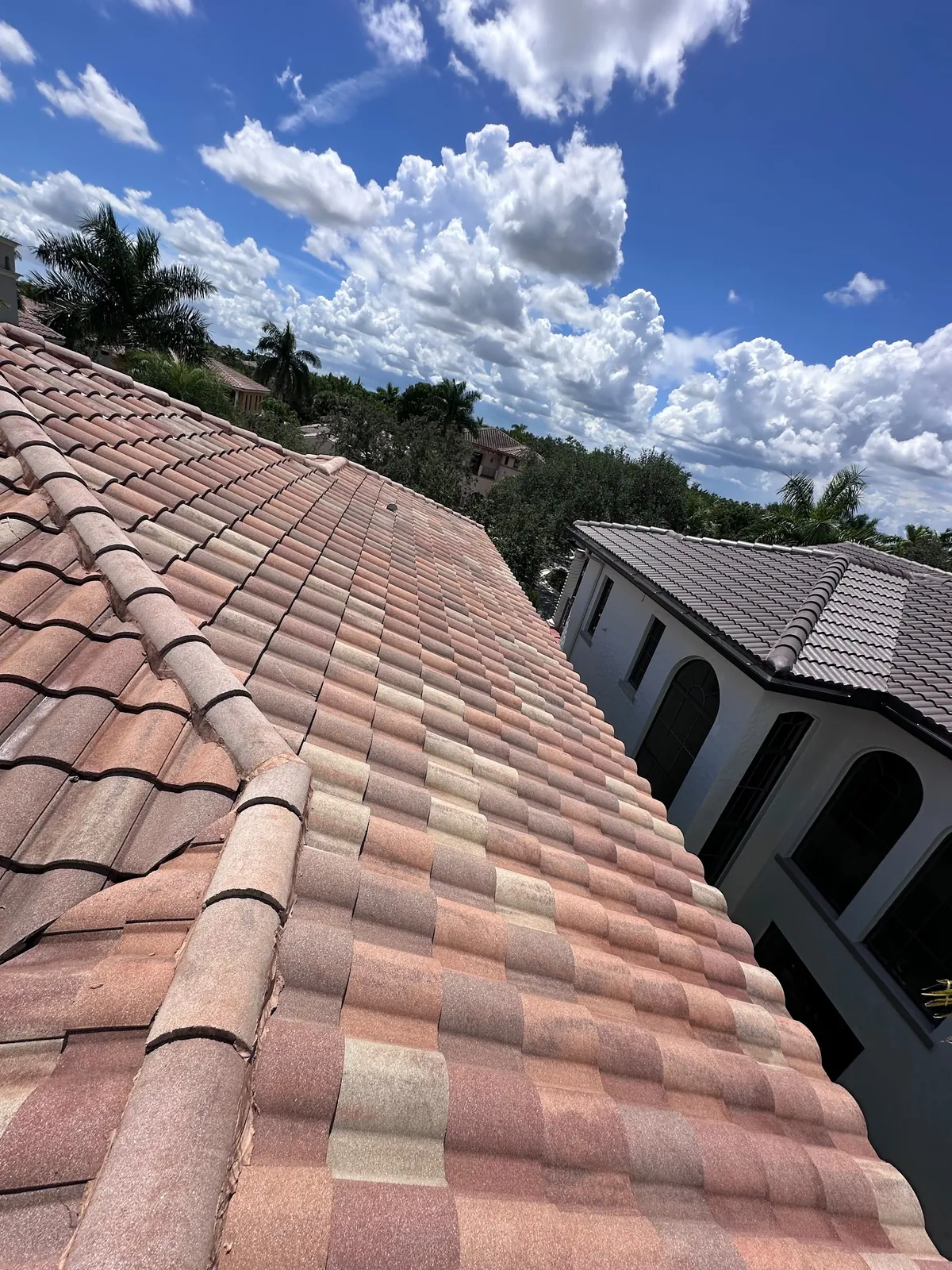
Walk around the house and look up. Binoculars help. You are checking the roof for storm damage you can see without climbing:
- Missing, cracked or slipped tiles, or bare patches where shingles have torn away
- Shingles that are lifted, creased or flapping
- Flashing that is bent, lifted or hanging loose at walls, chimneys and skylights
- Dented or missing roof vents and vent caps
- Branches lying on the roof
- Gutters that are bent or pulled away, and shingle granules collecting in them or at downspouts
- Inside, new ceiling stains or water near the top of walls
Note what you see, but do not try to judge the full extent from the ground. Much roof storm damage under tile only shows up when a roofer lifts the tiles.
When to stop and call a pro
Call a licensed roofer if anything is missing, broken or loose, if water has come into the house, or if a branch or debris is on the roof. Do not try to cover the roof yourself, remove a branch from it or reset loose tiles. The roofer can put a temporary cover or tarp on to limit water getting in until the repair. Keep receipts for it.
How the insurance sequence usually runs
Every policy is different, and your insurer decides what is covered. The steps usually run in this order:
- Report the claim. Call your insurer or use its app as soon as you can. Florida policies set deadlines for reporting a claim, so check yours.
- Limit further damage. Take reasonable steps to stop water getting in, and keep the receipts.
- The adjuster inspects. The insurer sends an adjuster to look at the roof and the inside damage.
- A roofer assesses it too. A written description of the damage from a licensed roofer helps you compare it with the adjuster’s findings.
- The insurer decides. It sends its decision and estimate. Read it alongside your policy.
- The repair is done once the claim is settled, or sooner where you choose to go ahead.
A named storm or hurricane often comes with its own deductible, which works differently from your usual one. Check your declarations page so the numbers do not come as a surprise.

Checking who works on your roof
After a big storm, many people offer roof work. Whoever you use, check that they hold a Florida roofing licence through the state’s licence lookup, carry insurance, and give you a written scope of work. Read anything before you sign it, especially anything that refers to your insurance claim.
How One Call fits in
One Call Home Pros does not hold a roofing licence and does not do roof work. Tell us what you can see from the ground, whether water has come in and whether you have opened a claim. We match you with a vetted local roofer who is licensed and insured for the job. The roofer inspects, documents the roof storm damage for you and makes the repair. One Call vets the roofer, arranges the visit and stays with the job.
You pay One Call, and One Call pays the roofer. Ask what the price covers before work starts. Financing is available for roof repair or replacement; ask about it when you call. See roof repair for more, or the pages for roof repair in Margate, Davie and Hollywood.
Questions about roof storm damage
Can I clean up the yard before the adjuster comes?
Photograph everything first, including debris on the ground. Then clear what is a hazard. Keep pieces of tile or shingle that show the damage.
Should I wait for the adjuster before calling a roofer?
You do not have to. A roofer’s written assessment helps your claim, and the roofer can advise on limiting water getting in. Keep your insurer informed.
What if I cannot see any damage from the ground?
Damage under tiles and to the underlayment often cannot be seen. If there was strong wind or a leak has started, get a roofer to inspect.
Is it safe to go on the roof after the storm passes?
No. Wet or damaged roofs are dangerous, and tiles break underfoot. Leave the roof to a licensed roofer.
Does One Call handle my insurance claim?
No. Your insurer handles the claim. One Call connects you with a vetted, licensed roofer who inspects and repairs the roof, and One Call stays with the job.
Get the roof inspected
Photograph everything, stay off the roof and report the claim. Then tell One Call what you can see, and we connect you with a vetted, licensed local roofer.