
A ceiling stain on an older house is worth acting on before the next rain, even if it looks dry today. For roof repair in Margate, call One Call Home Pros: we connect you with a vetted, licensed, insured local roofing professional who traces the leak and fixes it. One Call does not hold a roofing licence and does not do the work. We arrange it, check the pro and stay with you until the roof is sound.


Why Margate homes need roof repair
A large part of Margate was built in the 1960s and 1970s, and the city is more modest in scale than some of its neighbours: single-storey houses on ordinary lots, many with low-pitched roofs, carports and later additions. Few of those houses still carry their first roof, but many carry roofs that are themselves well into middle age, sitting on decking and framing that is original.
That mix shapes the repair work. A roofer here regularly finds old patches on top of older patches, decking softened by a slow leak nobody noticed, and additions whose roofs were tied into the main house without much care. Margate also has a substantial 55-plus condominium population. In those buildings, the roof usually belongs to the association rather than to any one owner, which changes who makes the call.
What a Margate roofer looks at
Slow and active leaks
A drip in a storm or a stain that grows a little with each rain. The pro finds where water gets past the roof covering.
Broken and missing tile
Cracked or loose concrete and clay tile on older roofs, and tile that has slipped and left the underlayment open to the sun.
Lifted or worn shingles
Shingles that wind has peeled back, and older shingles that have lost their protective granules and gone brittle.
Flashing and vent boots
Tired metal at walls and chimneys, and cracked boots around plumbing vents that are often as old as the roof.
Soffit, fascia and rafter tails
Rotted fascia boards and exposed rafter ends at the eaves, common on houses of this age.
Wind and storm damage
Damage after a storm, with photos and a written report you can hand to your insurer.
Before anyone climbs a ladder
Please do not go up yourself. Low roofs look easy, and many falls happen from exactly that height. Shingles on an older roof can tear under foot, and tile cracks. Here is what is worth doing from the ground and from inside instead:
- Find the wettest spot on the ceiling and set a pan or bucket beneath it, with old towels around the edge.
- Move anything that should not get wet: beds, rugs, papers, televisions.
- If the drywall is sagging and heavy, stay out from under it.
- If water is near a light or a fan, turn that breaker off.
- Take pictures, with the date, of the ceiling, the floor and anything that got soaked.
Then reach One Call by phone or the quote form, and say whether the leak comes with every shower or only in heavy, wind-blown rain. That difference alone tells a roofer a good deal about where to look.
Older roofs carry their history
Most roof repair in Margate starts with a roof that has already been repaired at least once. That matters, because earlier fixes are a common source of new leaks. A patch of roofing cement around a vent, a few shingles of a different colour, a section of tile set in mortar where the rest is fastened: each one tells the pro something about where trouble was before.
On a house of this age, the pro also looks below the roof covering:
- Decking. Plywood or plank decking that has been wet for a long time goes soft and spongy. Shingles nailed into soft decking will not hold in wind.
- Underlayment. On tile roofs, the underlayment does the real waterproofing. When it has dried out and cracked, new tiles alone will not stop the leak.
- Flashing. Old flashing may have been reused when the roof was last replaced, so it can be much older than the shingles around it.
None of this means the roof has to come off. It means the repair should go deep enough to reach the actual cause. Ask the pro to show you, in photos, what they found under the surface.
Florida rooms, carports and flat additions
Many 1960s and 1970s houses in Margate have grown since they were built. A screened porch became a Florida room. A carport was enclosed into a bedroom or a garage. A back room went on with a nearly flat roof to fit under the eaves of the main house.
Those additions are among the most common places for a leak on older houses, for three reasons:
- Low pitch. A flat or low-slope roof holds water longer. Seams, drains and edges are under more stress than on a sloped roof.
- The tie-in. Where the addition’s roof meets the original roof or wall, a strip of flashing is all that keeps water out. If it was done cheaply, it shows.
- Different materials. A built-up or rolled roof on the addition meets shingles or tile on the main roof. Two materials, two rates of wear.
If your stain is in a room that was added later, say so when you call. A roofer who does flat and low-slope repairs is a different match from one who only works on tile, and One Call chooses with that in mind.
Condo roofs and who calls
If you own a unit in one of Margate’s 55-plus condominiums and water comes through your ceiling from above, start with the association or the management company rather than a roofer. In most condominiums the roof is a common element, which means the association is responsible for it and chooses who works on it. Your unit’s interior may be a different question, and your governing documents set out where the line falls.
A practical order of things:
- Protect the unit and photograph the damage.
- Report it to the management office in writing, with the date and the photos.
- Ask whether the association will send its own roofer, and when.
- Keep a copy of everything you send and receive.
If you own a single-family house or a villa where the roof is yours, One Call can arrange the roofer directly. If you are a condo board member or a manager looking for a licensed roofer for the building, call One Call and describe the building and the problem.
Shingle roofs on single-storey houses
Asphalt shingle is common on the older houses here, especially those that have been re-roofed rather than kept in tile. Shingles fail in a few predictable ways in this climate. The sun bakes the oils out of them until they crack. Wind gets under an edge and lifts it, breaking the seal strip that holds it flat. Granules wash into the gutters, and the bare spots then wear faster.
A single lifted or torn shingle can often be replaced or resealed on its own. A roof where shingles are cracking everywhere is a different conversation, and the pro will be plain with you about it. Either way, ask to see photos of the worst areas.

Ridge caps and mortar on older tile
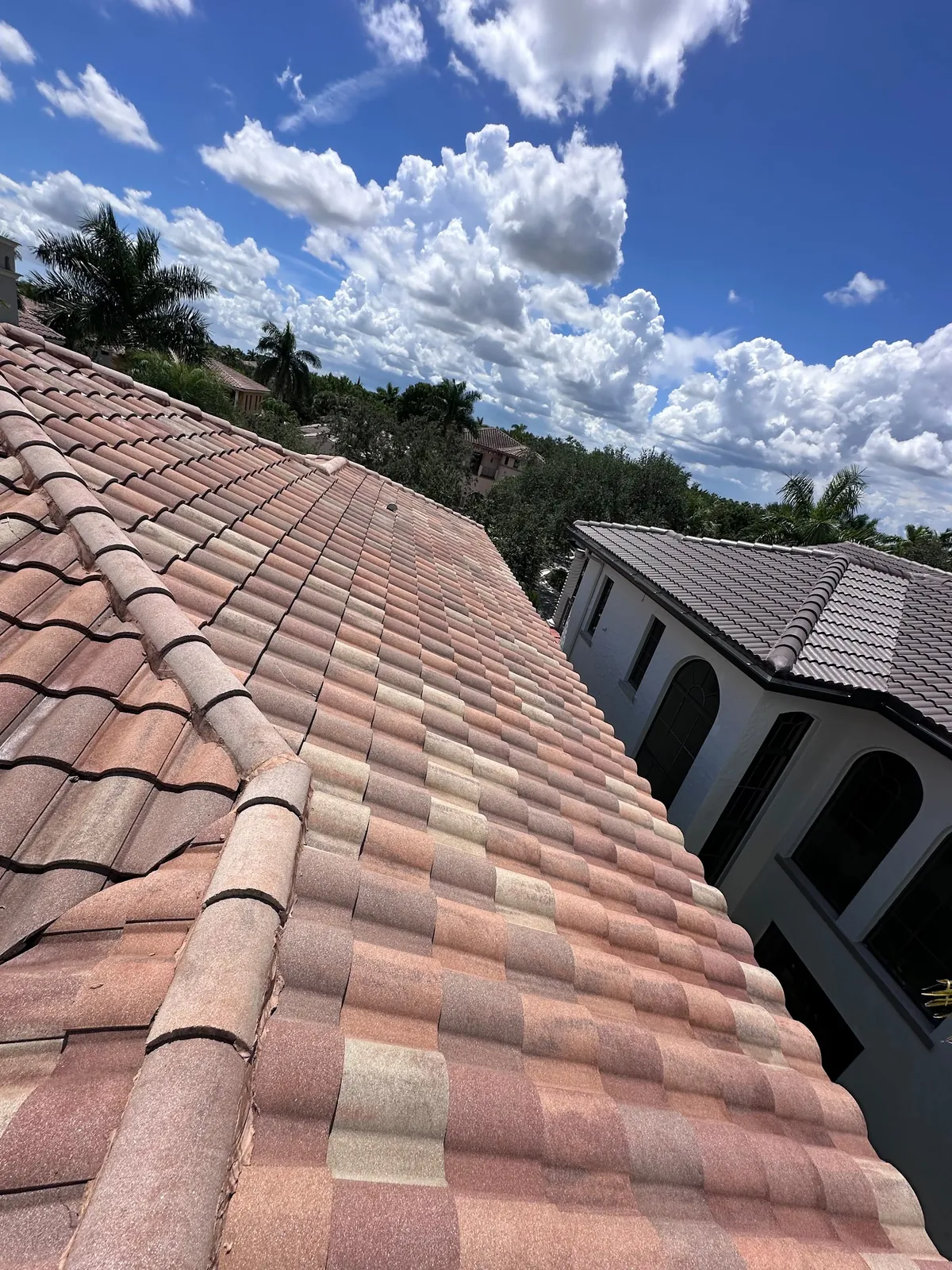
Tile roofs from earlier decades were often finished with mortar at the ridges and hips, and sometimes the field tiles were set in mortar too. Mortar does not flex. Over many seasons of heat and cooling it cracks and lets go, and ridge caps start to rock or slide. Water then gets in along the top of the roof, where it can run a long way before it shows on a ceiling.
Loose ridge tile is also a wind problem. A cap that is barely held can be lifted by a strong gust and carried off, opening the ridge to the next rain. The repair is usually to reset the caps with fresh mortar or a modern fastening method, depending on what the roof can take. Ask the pro which approach they would use and why. If you can see a ridge line from the street that no longer runs straight, mention it when you call about roof repair in Margate, along with how long it has looked that way.
Water-stained ceilings in older houses
A wet ceiling is a reason to be careful about more than the roof. Textured or popcorn ceilings applied before the 1980s can contain asbestos. If your house is from the 1960s or 1970s and the stained ceiling has that kind of texture, do not scrape, sand or cut into it while it dries out. Have a sample tested before anyone disturbs it. Drywall that has held water for a while may need replacing once the roof is fixed, and that part is a separate job from the roof repair itself.
Pipe boots and old vents
Every plumbing vent that passes through your roof is sealed by a boot, usually rubber or lead. On a house built in the 1960s or 1970s there may be several, and they often went on with the last roof and have aged in the sun ever since. A rubber boot cracks around the pipe. A lead boot can be chewed by squirrels or split along a seam. The leak that follows tends to appear in a bathroom or a hallway ceiling, near an interior wall where the vent runs.
This is one of the simpler roof repairs. It is also easy to miss if nobody looks closely. When you call about roof repair in Margate, mention whether the stain is near a bathroom or a kitchen. It helps the pro check the vents first.
The roof edge on older houses
On older houses, the eaves often show their age before the roof does. Fascia boards rot from behind when gutters overflow or when there is no drip edge to throw water clear. On houses with exposed rafter tails, the ends of the rafters themselves can soften. Soffit panels split, sag or come loose, and once there is a gap, rats and birds find it.
The pro cuts out and replaces rotted wood, refits or replaces soffit panels, and checks that water now leaves the roof edge cleanly. If the rot runs back into the rafters, they will tell you before going further.
Gutters that send water the wrong way
Gutters on older houses have often been replaced, extended or patched over the years, and not always with the roof in mind. A gutter that sags, pulls away from the fascia or sits too high can push water back behind the board instead of carrying it off. Downspouts that dump onto a lower roof, such as the flat roof of an addition, concentrate water on exactly the surface least able to shed it.
When the pro looks at a leak or a rotted edge, they will often point to the gutter as part of the cause. Some roofers adjust or reset gutters as part of the repair; others leave it to a gutter specialist. Ask which applies, so the fix at the roof edge is not undone by the next downpour. In the meantime, clearing leaves from a gutter you can reach from a steady step stool on the ground is fine. Anything higher can wait for the pro.
After wind and heavy rain
When a storm has passed, do your checking from the ground. Look at each side of the roof for missing shingles, broken or shifted tile, and flashing that has bent away from a wall. Look along the eaves for soffit panels that have dropped. Check the yard for pieces of roofing. Inside, keep an eye on the ceilings for a few days, especially in closets and corners.
If the roof is open, the pro can put a temporary cover or tarp on it before the repair. Do not climb up to do it yourself.
Permits and inspections
Smaller fixes, like a handful of shingles or a vent boot, are often simple. Larger roof work in Florida needs a permit and an inspection, and the licensed roofer is the one who applies for it. Broward County sits in the state’s High-Velocity Hurricane Zone, so the rules on fastening, underlayment and materials are strict, and a roofer who handles roof repair in Margate regularly works within them. Ask the pro at the inspection whether your repair needs a permit. If you are in a villa or a community with an association, ask the association too, because some want to approve roof materials or contractor access before the job starts.
Records for your insurer
Storm damage claims run more smoothly with good records. Keep your dated photos from inside and from the ground, and keep any roofing debris. Ask the pro for photos taken on the roof and a written description of what was damaged and what the repair involves. The claim is yours to make with your insurer. The pro is not an adjuster, but a clear written record is usually what an insurer asks for first.
From your call to a dry ceiling
- You tell One Call where the water shows, what the roof is made of if you know, and whether it is a house, a villa or a condo.
- We match you with a vetted roofer, licensed and insured for that roof type, who works in Margate.
- The pro inspects, explains what they found and what the repair involves, and answers your questions before any work starts.
- If a permit is needed, the licensed pro applies for it.
- The pro carries out the repair.
- If the next storm shows a drip, you tell One Call and we follow it up.
You pay One Call for the job, and One Call pays the pro. Before work starts, ask what the price covers: the materials, any decking that needs replacing, the clean-up. For larger roof work, financing is available; ask about it when you call.
If the pro finds that the roof has failed across a wide area, they will tell you. A full re-roof is a bigger job, and the roofing pros One Call works with take it on if you reach that point.
One Call arranges the same work next door, with roof repair in Coconut Creek and roof repair in Tamarac.
Questions from Margate
My condo ceiling is leaking. Should I call a roofer?
In most condominiums the roof belongs to the association, so report the leak to the management office first, in writing, with photos. If the association asks you to arrange a roofer, or the roof is yours, call One Call.
The roof was repaired before. Why is it leaking again?
Older patches are a common source of new leaks, and the cause may be below the surface: soft decking, worn underlayment or reused flashing. The pro looks beneath the old repair and tells you what they find.
The leak is in the room we added. Is that normal?
It is one of the most common places on older houses. Low-slope roofs on additions hold water longer, and the join with the main roof is a weak point. Mention it when you call.
Can shingles be repaired, or do they all need replacing?
Individual lifted or torn shingles can often be replaced or resealed. If the whole roof is cracking and shedding granules, the pro will say so plainly.
Get a roofer to look at it
Tell us where the water shows and what kind of home you have. One Call lines up a vetted, licensed roofing professional for your Margate house and stays with the job.