
On a big property, AC installation in Davie involves more than the house: there may be a guest cottage, a barn or a workshop to cool, a well pump on the same electrical service, a septic system in the yard and a long drive for the contractor’s truck. One Call Home Pros helps you plan around all of it. We do not install air conditioning, and the HVAC licence belongs to the contractor, not to us. You describe the property, and we arrange a vetted local professional, licensed and insured for the work, who handles installations on larger lots. The contractor installs the system. One Call checks them, organises the visit and stays involved through the inspection.

Why Davie homes need installations planned around the land
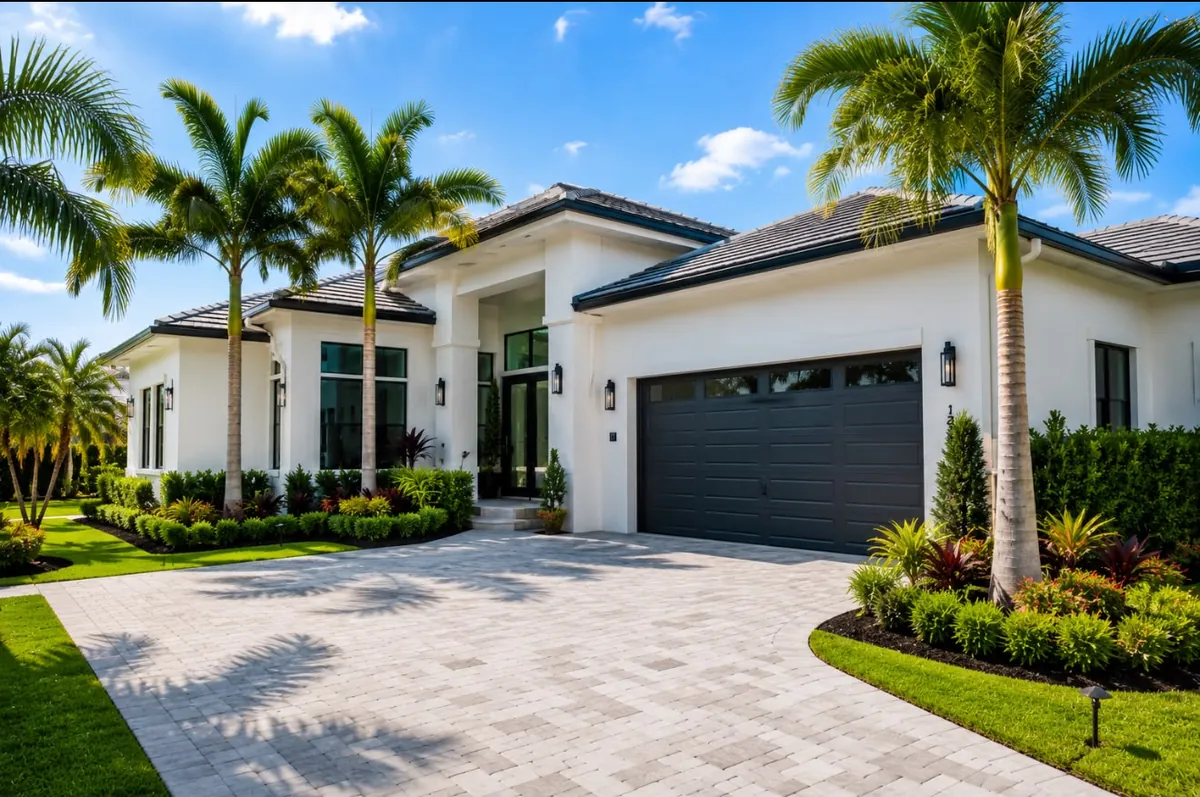
Davie is spread out and semi-rural in parts. Large lots and agricultural zoning sit beside ordinary suburban streets, and a lot of properties run on a private well and septic system rather than town water and sewer. Houses can sit well back from the road, with gates, long drives and outbuildings between the street and the front door.
For an air conditioning replacement, all of that matters. A big lot gives you choices about where the outdoor unit goes, but long refrigerant line runs have limits. A well pump, a pool pump and a barn may all draw on the same electrical service as the new system. On a septic property, where the condensate water goes deserves a thought. And getting heavy equipment from the road to the house can be a job in itself.
Longer drives between properties also shape the scheduling. Contractors plan their days around distance here, so clear directions and access details help the visit go smoothly.
What a Davie installation can include
Systems for larger houses
A matched outdoor unit and air handler, or more than one system, sized for a house that may be spread across a wide footprint.
Guest houses, barns and workshops
Cooling for outbuildings, often with their own small systems or ductless units.
Placement on a big lot
Where the condenser sits, how far it is from the air handler, and what that means for the refrigerant lines.
Power alongside wells and pumps
The circuit for the new system, checked against everything else drawing on the same service.
Condensate on septic properties
A sensible discharge point for the water the system removes from the air.
Permits and zoning
The permit, the inspection and any town or zoning questions, especially for outbuildings.
Plenty of room, and what to do with it
On a suburban lot, the outdoor unit usually goes where the old one was, because there is nowhere else. On a large lot, there is more choice, and that is worth using. AC installation in Davie is a chance to put the condenser somewhere quieter, shadier or easier to service than its original spot.
There are limits, though. The further the outdoor unit sits from the air handler, the longer the refrigerant lines. Every manufacturer sets a maximum length and height difference for those lines, and long runs can need adjustments to the refrigerant charge. The contractor will tell you how far the unit can reasonably move.
Think about the view from the house, the noise near bedrooms and patios, the reach of the irrigation, and where animals graze or roam. A unit inside a paddock fence, for instance, needs protection from curious horses and cattle.
Placing the condenser on a big lot
The things the contractor weighs on an open property are a little different from a tight suburban yard:
- Firm, level ground for the pad, out of any low spot where water collects after heavy rain
- Clear air on all sides, away from hay storage, feed bins and dusty work areas
- Protection from animals, mowers and vehicles
- A short, protected route for the lines and the wiring back to the house
- Access for future service without crossing a pasture or opening a gate
- Distance from the septic tank and drain field, so the pad is not on top of either
Guest houses, barns and workshops
Many Davie properties have more than one building that needs cooling: a guest cottage, a home office over the garage, a workshop, a tack room or a barn apartment. Some were fitted with their own small central systems; some have window units; some have nothing.
When the main house system is being replaced, it is worth thinking about the outbuildings at the same time. A separate building usually gets its own system rather than ducts run from the house. Ductless units, with an outdoor unit and one or more heads on the walls inside, suit many outbuildings well, because they need no ductwork and can cool a single room efficiently. Ask the contractor to look at any outbuilding you want cooled while they are on the property, even if it is not part of this job. A complete picture lets you plan the work in the order that makes sense.
The electrical load on a rural property
A well pump, a pool pump, a barn with lights and fans, an electric gate and a workshop full of tools can all share one electrical service with the house. A new air conditioning system adds its own heavy load.
The contractor checks the breaker and the wiring for the new equipment, and the outdoor disconnect beside it. On a property with a lot of other loads, they may also look at whether the service as a whole has room for the new system. If the panel needs work, that is a job for a licensed electrician, and it is better to find out on the visit than on install day.
Open properties also see a lot of lightning. Ask the contractor whether a surge protector for the outdoor unit makes sense. It is a small part to add during an installation.
Is it time to replace?
Repairs fix most air conditioning problems. Replacement is worth considering when the same system has needed several significant repairs in recent seasons, when refrigerant has been added more than once, or when the compressor fails on equipment that is already old. If the house never feels dry, or the far rooms never cool, the system may be the wrong size or simply worn out.
Some older equipment still runs on a refrigerant that is no longer made, which makes each recharge harder to justify. The contractor will look at the system and tell you what they see. The choice between repair and replacement stays with you.
Condensate on a well-and-septic property
An air conditioner pulls a great deal of water out of humid Florida air. That condensate has to go somewhere. In town, it often drains to the sewer or simply outdoors. On a property with a septic system, it is worth asking where it will go, because adding steady extra water to the septic system is rarely what you want.
Many contractors prefer to run the condensate line to a safe discharge point outdoors, away from the foundation and away from the drain field. Ask the contractor where the line will end, and make sure the outlet is somewhere it will not be blocked by mud, mulch or hooves. Every new installation should also have a pan under the air handler and a safety switch that turns the system off if the drain backs up.
Dust, pollen and the filter
Properties near fields, paddocks, riding arenas or unpaved drives often carry more dust and pollen in the air than suburban streets. That dust ends up in two places: the outdoor coil and the indoor filter.
A clogged outdoor coil cannot shed heat, and a clogged filter starves the system of air. Ask the contractor how often to change the filter on your property, and whether a larger or deeper filter cabinet would suit the house. Keep the outdoor unit away from the dustiest areas where you can, and have the coil cleaned at every maintenance visit.

Sizing a spread-out house
Larger houses on acreage are often single storey and spread wide, with wings, porches and rooms added over the years. That makes sizing and air distribution harder. One system serving both ends of a long house may struggle to reach the far rooms; two systems, each serving its own wing, may work better.
The contractor works out the capacity with a load calculation for the house as it is today: floor area, insulation, windows and their orientation, ceiling heights and the ducts. Wide covered porches and shade trees reduce the load on some sides. Large west-facing windows increase it. Ask how the capacity in the quote was arrived at, and whether one system or two makes more sense.
Ducts and the air handler
In a long single-storey house, the ducts run through the attic and the rooms at the ends of the runs often get the least air. Old ducts may also have leaks, crushed sections or missing insulation. The contractor should inspect them and tell you whether they can be sealed and kept or need replacing.
The air handler usually sits in a closet, a utility room or the garage. It should be matched to the new outdoor unit, and in most cases the contractor will recommend replacing both together. If the air handler is in a garage or utility room that also holds the well pressure tank or the water heater, check there is room to service everything.
The efficiency rating
Efficiency is shown as a SEER2 rating. The higher it is, the less electricity the system uses over a season to give the same cooling, and the more it costs to buy. On a property with a lot of other electrical loads, efficiency can matter more, because the air conditioner is one of the largest users.
Ask the contractor to quote two efficiency levels and explain what each means for the way you use the house. If uneven temperatures in a long house are a problem, ask whether a variable-speed system would help.
Delivering heavy equipment across the land
A new outdoor unit and air handler arrive on a truck, and on a big property the truck may not be able to get close to the house. Soft grass after rain, a narrow gate or a slope down to the back of the house can all mean the equipment is carried or wheeled a fair distance. That takes more people and more time, and it is worth knowing about before the quote is written.
Tell the contractor on the visit how vehicles usually reach the house and where a delivery truck could park. If the old unit sits behind a pool cage, a fence or a garden, they will plan a route to bring the new one in and take the old one out without damage. Good planning here keeps an AC installation in Davie from turning into a day of digging a truck out of the lawn.
Getting the contractor to the property
A rural property can be harder to reach than it looks on a map. Help the visit and the installation go smoothly:
- Give One Call clear directions, including which gate to use and anything a map gets wrong.
- Arrange gate access for the agreed time, and tell us about anything the contractor needs to know on arrival.
- Secure dogs, horses and other animals away from the drive and the work area.
- Mention soft ground, low bridges or narrow culverts that could trouble a truck carrying heavy equipment.
- Clear a path from where the truck can park to both the outdoor unit and the air handler.
How One Call arranges it
Tell us about the property first: the house and any outbuildings, where the equipment sits, how old it is, what is going wrong, and whether the property is on a well and septic. With that, One Call chooses a vetted HVAC contractor, licensed and insured for the work, who regularly installs systems on larger lots.
The contractor visits, looks at the equipment, the ducts, the electrical service and the site, and gives you a written quote. If you go ahead, the permit and the work are carried out under the contractor’s licence. One Call stays your point of contact throughout. If anything needs attention later, call us and we follow it up with the contractor.
You pay One Call, and One Call pays the pro. Ask what the quote includes before work begins: the equipment, any line set, pad, drain or electrical changes, outbuilding units if included, and the removal of the old system. Financing is available for installations; ask about it when you call.
Permits and zoning
Replacing a central air system in Florida generally needs a building permit, applied for by the licensed contractor. After the installation an inspector checks the work, including the electrical connection and how the outdoor unit is fastened down.
Outbuildings can raise their own questions. Adding cooling to a barn apartment or a workshop may involve zoning or permitting questions that a straight replacement in the house does not. If you are planning work on an outbuilding, check with the town early, and give the contractor whatever you learn.
The day itself
On the day, the contractor isolates the power, recovers the refrigerant from the old system and removes the old equipment. The new outdoor unit is set on its pad and fastened down, the air handler is installed, and the lines, the power, the drain and the controls are connected. The system is evacuated, charged and started, and the airflow is checked in the far rooms as well as the near ones.
Plan for the house to be without cooling for part of the day. Before the contractor leaves, ask to be shown the thermostat, the filter and how often to change it, and the drain safety switch. Keep the permit, the final inspection and the warranty registration together, and book regular maintenance from the start. On a dusty, open lot, it is the simplest way to protect your AC installation in Davie.
Questions from Davie
Can the outdoor unit be moved further from the house?
Within limits. Every manufacturer sets a maximum line length and height, and long runs may need charge adjustments. The contractor will tell you how far is practical.
My property is on septic. Where should the condensate go?
Usually to a safe point outdoors, away from the foundation and the drain field. Ask the contractor where they plan to discharge it.
Can the barn or guest house be cooled at the same time?
Often. Outbuildings usually get their own system, and ductless units suit many of them. Ask the contractor to look at them on the visit.
Will my electrical service handle a new system with the well pump and pool pump?
The contractor checks the circuit and the service on the visit. If the panel needs work, a licensed electrician handles it, and you know before install day.
A single call to start
Tell us about the property, the buildings and how to get there. One Call arranges a vetted, licensed contractor to quote for AC installation in Davie. For nearby homes, see AC installation in Plantation and AC installation in Pembroke Pines.