
If a limb has come down on your roof, stay clear of it and do not try to pull it off. If water is coming in, catch it, clear the room and call. For roof repair in Plantation, One Call Home Pros connects you with a vetted, licensed, insured local roofing professional who assesses the damage and repairs the roof. One Call does not do roofing work and holds no roofing licence. We arrange the right pro, keep track of the job and stay involved until the roof is watertight.


Why Plantation homes need roof repair
Plantation is large and established, and much of it is single-family housing from the 1960s through the 1980s, set under a heavy, mature tree canopy. The trees are a big part of what makes these streets what they are. They are also the single biggest influence on roofs here.
Branches rub tile and shingle in the wind. Leaves and needles collect in valleys and gutters and hold water against the roof. Shade keeps parts of the roof damp long after the rain stops, and that feeds moss, algae and rot at the eaves. In a storm, the same canopy produces debris, from twigs and fronds to whole limbs, that lands on roofs across the city. Add houses whose framing and decking date back decades, and most roof work here is about trees, water and age together.
Roof repairs in the tree-lined neighbourhoods
Leaks after storms
Water through a ceiling after heavy rain or wind. The pro traces it to the point of entry, often a valley, a wall or a spot where debris struck.
Tile broken by debris
Concrete and clay tile cracked by falling branches or limbs, and tile that has shifted out of line.
Shingles worn or lifted
Shingles scuffed by rubbing branches, lifted by wind or worn thin in shade-damp corners.
Valleys, flashing and boots
Valley metal buried under leaves, flashing at walls and chimneys, and cracked seals around vent pipes.
Fascia and soffit rot
Damp fascia and soffit at shaded eaves, where gutters clog and overflow behind the boards.
Storm damage records
Pictures of the damage and a plain written account, for any claim you decide to make.
When something has hit the roof
A falling limb is a different kind of roof problem from a slow leak. Do these things first:
- Keep away from the impact area, inside and out. A limb can shift, and a damaged ceiling can come down.
- Look for water and wires. If a branch has brought down a power line, keep well away and call the power company. If water is reaching anything electrical inside, switch that circuit off at the panel.
- Contain water inside with buckets and towels, and move belongings out of the room.
- Photograph everything before anything is moved: the limb, the roof from the ground, the ceiling, the floor.
- Call One Call and say what happened, roughly how big the limb is, and where it landed.
Do not climb up to drag the branch off. Even a modest limb is heavy, and the roof under it may be broken. Some roofers clear debris from the roof as part of the repair; others need a tree service to remove a large limb first. Ask which applies when the pro is matched.
Leaves, needles and blocked valleys
Valleys are where two roof slopes meet and channel water down. Under heavy canopy, they also collect leaves, needles, seed pods and twigs. Once a valley is packed, water no longer runs down it cleanly. It backs up, spreads sideways under the edges of the tile or shingle, and finds its way onto the underlayment. The same thing happens behind chimneys and where a roof slope runs into a wall.
Debris also holds moisture against the roof long after the rain, which speeds the wear of the valley metal and the underlayment beneath it. On older roofs, a leak that only appears in heavy, prolonged rain is very often a blocked valley.
When the pro inspects, they clear the valley to see what is under it. If the valley metal has rusted through or the underlayment beneath it has failed, that section is repaired. Ask how often they would suggest having valleys checked under trees like yours. Mention the trees that overhang the house when you ring about roof repair in Plantation; the answer changes where the roofer starts looking.
Branches that rub
A branch that touches the roof in still air will scrape it in wind. Over time it wears away shingle granules, cracks the glaze on tile, loosens ridge caps and grinds at flashing. The damage can be hard to spot from the ground because it is often hidden under the branch.
Signs to look for from the yard: a branch that rests on or within reach of the roof, a worn or discoloured patch beneath it, and granules or tile fragments in the gutter below. A roofer repairs the roof. Cutting the branch back is a job for a tree professional, and it is worth doing before the roof repair so the new work is not worn down the same way. Ask the roofer to tell you which branches they would want cleared.
Gutters under a canopy
Gutters under big trees fill faster than anywhere else on a house. Once they are full, rain pours over the back edge, behind the gutter, and soaks the fascia and the eaves. In a heavy storm, a blocked downspout can back water up onto the lowest course of tile or shingle. Gutter guards help with leaves but can trap needles and seed pods.
A roofer looks at the gutters as part of finding a leak at the eaves, and will tell you if they are the cause. Some roofers reset or replace sections of gutter with the repair; others leave that to a gutter specialist. Ask which, so the roof edge is not soaked again the next time the gutter fills. Roof repair in Plantation is often as much about where the water goes after it leaves the roof as about the roof itself.
Palms and what they drop
Palms are common alongside the oaks, and they drop heavy, stiff fronds and, on some species, seed clusters or nuts. A falling frond can crack a tile or lift a shingle edge, and dead fronds caught on a roof hold water and debris. Where a palm leans over the house, the area under it deserves a look after every storm. As with other trees, trimming is a job for a tree professional, and the roofer can tell you which palms are putting the roof at risk.
Branches as a bridge for animals
Overhanging branches give squirrels, rats and raccoons an easy route onto the roof. Once there, they look for a way into the roof space: a loose soffit panel, a gap behind rotted fascia, a chewed vent boot or a gable vent with a torn screen. Scratching or movement above the ceiling, droppings in the attic, or chewed material at the eaves are the usual signs.
The roofer can close the openings in the roof and the eaves and replace damaged vent boots and soffit. Removing animals already inside is a separate job for a wildlife professional, and it needs to happen before the openings are sealed. Mention any signs of animals when you call.
Shade, damp and rot at the edges
Shade keeps parts of a roof wet. On the north side of a house, under a dense canopy, the roof and the eaves may hardly dry out in a rainy summer. That brings three problems:
- Moss and algae on tile and shingle, which hold moisture and can lift shingle edges.
- Clogged gutters that overflow behind the fascia rather than away from it.
- Rot in fascia boards, soffit and, on older houses, the ends of the rafters.
Fascia rot is often the first sign. A board that is soft, swollen or flaking behind the gutter is letting water into the eaves. The pro cuts out and replaces rotten wood, refits soffit, and makes sure the drip edge throws rain clear of the wood. Ask whether the rafter tails behind the fascia are sound too.
Leaks that hide in the shade
Under a dense canopy, a roof is hard to see from the ground, and a slow leak can run for a long time before it shows. By the time a stain appears on a ceiling, the decking above it may already be soft. A few habits help you catch it earlier:
- After heavy rain, look at the ceilings in closets, the garage and any room you rarely use.
- If you can reach the attic hatch safely, look with a torch for damp insulation or dark streaks on the underside of the roof, staying on the joists.
- Watch for a musty smell in one room, or paint that bubbles near the top of a wall.
- Notice whether the same spot of tile or shingle stays dark long after the rest of the roof has dried.
Any of these is worth a call. Catching roof repair in Plantation at the stain stage, before the deck has rotted, usually keeps the job smaller.
Roofs on houses from the 1960s to the 1980s
Most houses here have been re-roofed at least once since they were built. What often remains original is the structure beneath: the rafters or trusses and, sometimes, the decking. A pro working on a Plantation house from this period commonly finds:
- Earlier repairs in roofing cement, sometimes several layers, around vents and walls.
- Decking softened by a slow leak that went unnoticed under the canopy, where stains are easy to miss.
- Additions and Florida rooms with their own low roofs tied into the main house, a frequent leak point.
- Flashing reused from an earlier roof, older than the covering around it.
Most of these are repairs. The point is to reach the actual cause, not to add another layer. Ask the roofer for pictures of whatever turns up under the surface.
Tile and shingle under trees
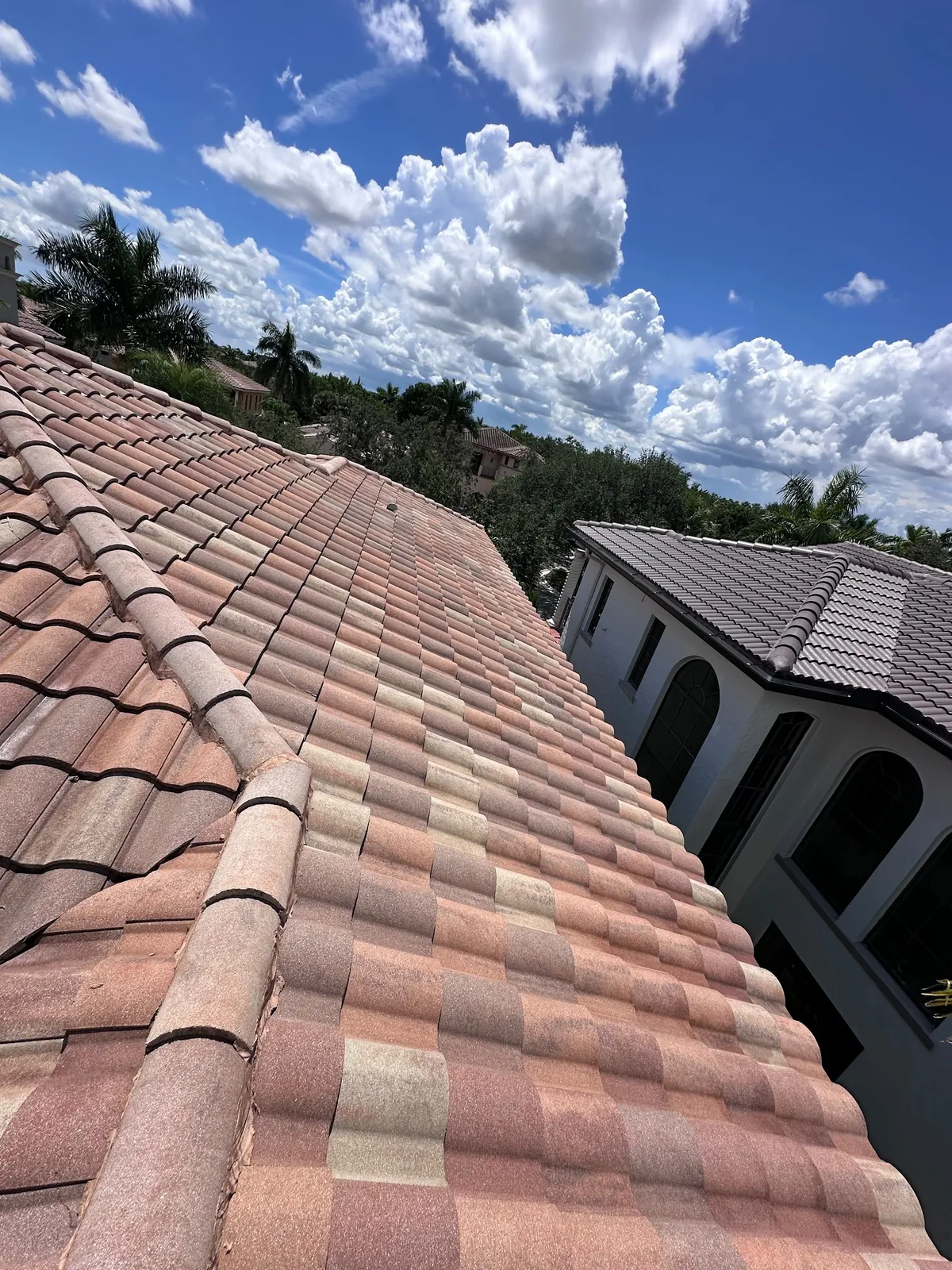
Tile handles a light branch strike better than shingle, but a heavy limb cracks it, and broken tile then lets water reach the underlayment. Tile also traps leaves in its curves and at the ridge. Repair means replacing broken tiles and checking the underlayment and deck beneath the impact.
Shingle shows wear from rubbing and moss first. Shingles can lift where moss grows under their edges, and lose granules where branches scrape. Damaged shingles can be swapped one at a time, as long as the surrounding roof still has life in it.
Whichever you have, mention the trees when you call. It helps One Call match a roofer used to working on roofs like yours.

After a storm passes
Storms here bring wind and debris together. Once it is safe to be outside:
- Walk round the house and look up at every slope you can see. Look for limbs, broken tile, missing shingles, and flashing bent away from walls.
- Check the valleys and the gutters for heavy loads of debris.
- Look at the eaves for soffit panels that have dropped.
- Watch the ceilings for a few days, especially in rooms under the trees.
- Photograph everything, and keep any broken roofing you find.
If a limb is on the roof or part of the roof is open, the pro can put a temporary cover or tarp on before the full repair. Ask whether the limb needs a tree service first. Do not go up.
Records for your insurer
Storm damage from a fallen tree or limb is a common insurance claim. The claim is yours, made with your insurer; the roofer is not your adjuster. You strengthen it with your own dated photos of the limb, the roof and the inside, taken before anything is moved. The roofer can add pictures taken up on the roof and a short written report on what broke and how it is being put right. Keep any invoices from a tree service separately, because your insurer may treat tree removal and roof repair differently.
Permits on established streets
Small roof fixes are often quick. Relaying tile and underlayment over an area, or rebuilding decking after a limb strike, normally calls for a permit and a city inspection, which the licensed roofer takes care of. Florida’s wind rules for Broward County are strict, so a repaired section is brought up to current fastening standards even on an older house. Ask the pro whether your repair needs a permit and how it affects timing. If a tree service has to remove a limb first, the order matters too: the limb comes off, the roof is inspected properly, and only then is the scope of the repair, and any permit, settled.
How One Call sets it up
When you call, it helps to say:
- what happened, a slow leak, a storm or a falling limb,
- where the water shows and which part of the roof is above it,
- the roof material, tile, shingle or flat, if you know it,
- which trees overhang the roof.
From that, One Call chooses a vetted roofer who holds the licence and insurance for your kind of roof and already works in Plantation. The roofer climbs up, works out where the water gets in and talks you through the fix. Before you agree, ask what the price includes. Should a later downpour bring the drip back, ring One Call and we take it up with the roofer.
The bill comes from One Call, and One Call pays the roofer. Financing is available for bigger work, such as rebuilding a section after a limb strike; ask about it when you call. Where a roof is worn out across most of its surface, the roofer will be straight with you about it, and the roofers One Call works with do full re-roofs as well as repairs.
The same arrangement covers the towns either side, through roof repair in Sunrise and roof repair in Fort Lauderdale.
Questions from Plantation
A branch is on my roof. Should I pull it off?
No. Keep clear of it inside and out, photograph it, and call. A large limb may need a tree service before the roofer can repair the damage. Ask about that when the pro is matched.
The ceiling only drips in long downpours. What does that mean?
Under heavy canopy, that is often a valley or gutter packed with leaves. Water backs up and runs sideways under the roof covering. The pro clears the valley and checks what is beneath it.
Will the roofer cut back my trees?
Roofers repair the roof. Trimming branches is usually a job for a tree professional, and it is worth doing before the repair so the new work is not scraped the same way.
Is a falling limb covered by insurance?
That depends on your policy and your insurer. Photograph the limb and the damage before anything is moved, and ask the roofer for a written report you can pass on.
Get the roof checked
Tell us what happened and where the water shows. One Call finds a vetted, licensed roofer for your Plantation house and keeps an eye on the work until the roof is sound again.