
Every roof in the city is different, so the most useful thing you can tell us is what kind of house you have and where the water shows. For roof repair in Fort Lauderdale, One Call Home Pros connects you with a vetted, licensed, insured local roofing professional suited to that roof, whether it is old clay barrel tile, a flat mid-century deck or a large waterfront hip roof. One Call is not a roofer and holds no roofing licence. The pro does the repair. We find the right one, sort out the details and keep checking in until the ceiling is dry.

Why Fort Lauderdale homes need roof repair
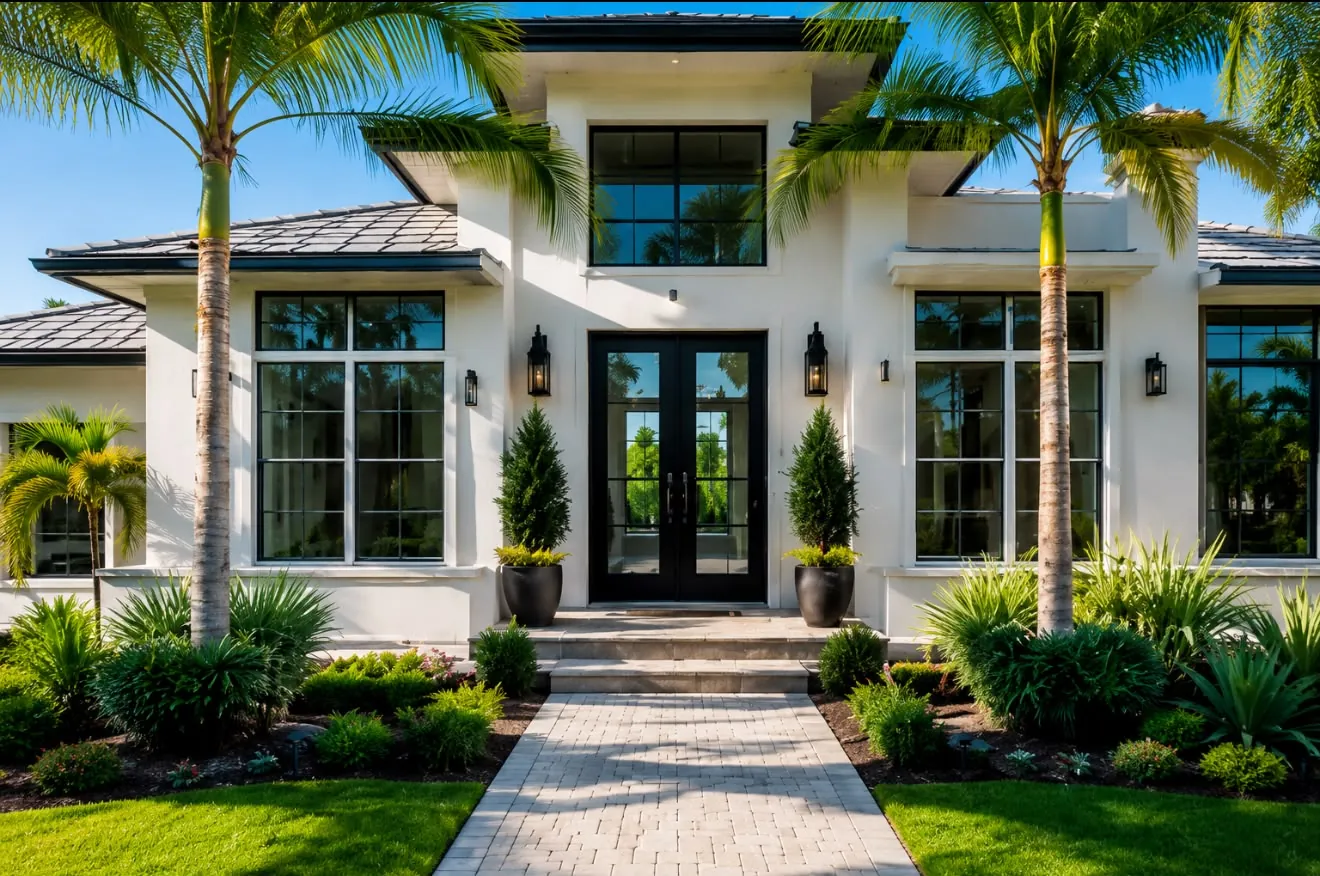
Fort Lauderdale is the county seat and has by far the most varied housing in Broward. Within a short drive there are downtown high-rise towers, historic neighbourhoods from the 1920s, streets of mid-century ranch houses, and waterfront estates on the canals and the Intracoastal. Each of those carries a different kind of roof, ages in a different way, and fails at different points.
The rules vary as much as the roofs. Permit requirements apply across the city, but historic district rules can change from one street to the next, and a house inside a designated district may need its repair reviewed before work starts. Waterfront houses face salt and open wind. Mid-century flat roofs hold water. Older tile roofs depend on underlayment and mortar that are long past their best. Matching the right roofer to the right roof matters more here than almost anywhere in the county.
The roof work One Call arranges here
Active leaks
Water through a ceiling, a wall or around a window in rain. The pro tracks it back along the roof to where it gets in.
Barrel and flat tile
Clay barrel tile and concrete tile that has cracked, slipped or blown off, with the underlayment beneath exposed.
Wind-lifted shingles
Shingles creased, lifted or stripped by wind, especially on exposed waterfront and corner lots.
Flashing, parapets and boots
Flashing at walls and parapets, scuppers on flat roofs, and the seals around plumbing vents.
Eaves and trim
Soft fascia boards, split soffit and decayed rafter ends, repaired so the roof edge sheds water again.
Storm documentation
Wind and storm damage photographed and described in writing for your insurer.
Right now, if water is coming in
There is no need to touch the roof. Inside, put something under the drip that will hold a fair amount of water, ring it with towels, and pull furniture and rugs out of the way. A ceiling that has gone soft and saggy should be left alone and the room kept clear. Water near a light, a fan or an outlet means switching that circuit off at the panel. Take photos with the time and date before you clean up, then call One Call or send the quote request with a short description of what you are seeing and what type of house it is.
Historic houses from the 1920s
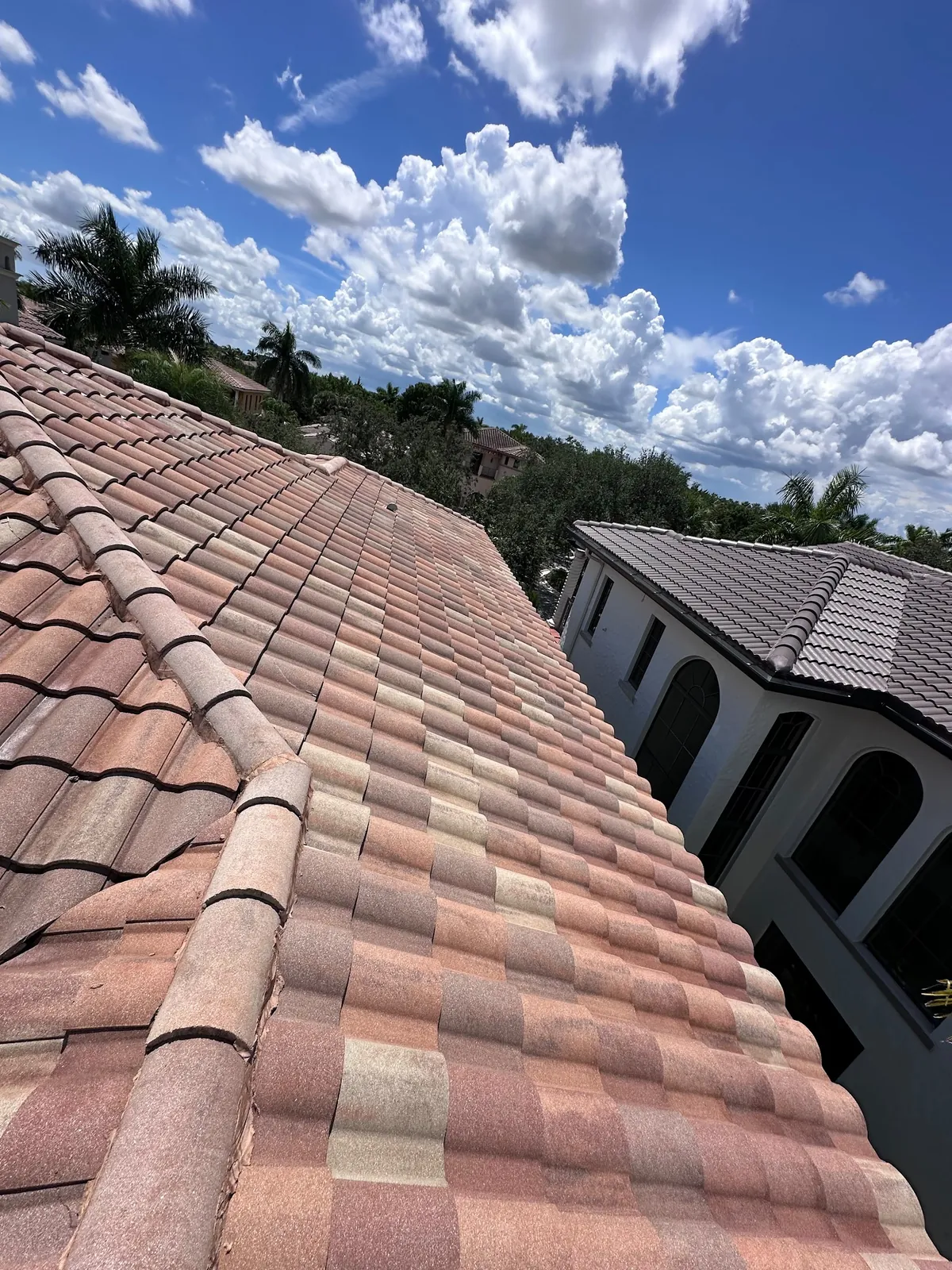
Some of the city’s oldest neighbourhoods date from the 1920s boom, with Mediterranean and Spanish-style houses roofed in clay barrel tile, often with flat roof sections behind decorative parapet walls. These roofs were built well, but the materials holding them together have now been through a very long life.
What a pro typically finds on a house of this age:
- Mortar-set barrel tile. The tiles were often bedded in mortar, which cracks over time and lets tiles slip or rock. Water then runs under the tile courses.
- Old or replaced underlayment. Whatever sits beneath the tile is doing the waterproofing, and on an old roof it may have been replaced once, or not at all.
- Parapet walls and scuppers. Flat sections behind parapets drain through openings in the wall. When a scupper blocks, water ponds against the parapet and finds its way into the wall.
- Original framing. Wood rafters and decking that have been dry for a century can be sound. Those that have been wet are not.
Original clay tile can sometimes be lifted, cleaned and relaid once the underlayment is renewed, which helps keep the house looking as it should. Ask the pro whether your tile can be reused and how they would match any that are broken.
Historic district rules
If your house sits inside a designated historic district, or is individually designated, a roof repair may need approval before work starts, especially if it changes materials, colour or profile anywhere the street can see. Whether that applies can change from one street to the next, which catches people out.
A practical order:
- Check whether the property is in a designated district or is designated itself. The city can tell you, and so can your title or survey papers in many cases.
- Have the pro inspect so you know exactly what the repair involves.
- If the repair alters anything people can see from the street, find out from the city which review comes before the permit.
- Once approved, the licensed pro applies for the building permit and schedules the work.
A like-for-like repair, replacing broken tile with matching tile, is often simpler than a change of material. Tell One Call if your house is historic when you call, so the roofer matched is ready for that conversation.
Mid-century ranch houses and flat roofs
Large parts of Fort Lauderdale were built in the 1950s and 1960s, with long, low ranch houses and modernist homes, many with flat or very low-slope roofs, deep overhangs, carports and clerestory windows. These roofs have their own failure points:
- Ponding. Water that sits on a flat roof for days after rain works at seams and wears the surface. Sagging decking makes it worse.
- Built-up and gravel roofs. Older flat roofs were often layered felt and tar with gravel on top. Gravel shifts and leaves bare spots; blisters form and split.
- Edges and gravel stops. The metal edge around a flat roof corrodes and pulls away, letting water under the membrane.
- Penetrations. Vent pipes, skylights and rooftop equipment all cut through a flat roof, and each one needs a sound seal.
If your house has a flat roof, mention it at the start of the call. Flat roof work is a different skill from tile or shingle, and One Call matches with that in mind.
Chimneys, skylights and clerestories
Older houses here often have a fireplace chimney, and mid-century houses often have skylights or high clerestory windows set into the roof line. All three interrupt the roof and depend on flashing to keep water out.
A chimney needs flashing where it meets the roof on every side, and a cricket, a small ridge behind it, to steer water around rather than letting it pond against the masonry. On a 1920s or 1950s house, that flashing may be original or patched many times, and the mortar in the chimney itself can let water in above the roof line. A skylight leak shows as drips on the frame or a damp ring in the shaft. A clerestory leak tends to appear as water running down the wall beneath the window.
Roof repair in Fort Lauderdale on these houses often comes down to one of these openings rather than the roof surface. Tell the pro which you have, and where the water appears relative to it.
Waterfront estates
Houses on the canals, the New River and the Intracoastal take two extra loads: salt air and open wind across the water. Salt corrodes the metal on a roof, from flashing and drip edge to fasteners and gutter hangers, and many waterfront leaks start at rusted metal rather than at the tile. Wind arriving over open water lifts edge and ridge tiles and drives rain sideways under laps and flashing.
Waterfront houses also tend to be large, with complex roofs, many valleys and wall joins, covered terraces and boat-house or cabana roofs. Each one is another set of joins to keep sealed. When you call, say how close the house is to the water and which side the wind usually comes from in a storm. The pro looks harder at the windward slopes and at the metal.

Terraces and roof decks over rooms
Both the older Mediterranean houses and many waterfront homes have terraces, balconies or sun decks built over living space. These are roofs too, just ones people walk on. Under the tile or pavers there is a membrane, and it has to turn up the walls, run under door thresholds and drain through scuppers or drains at the edge. When any of those details fails, water comes through the ceiling of the room below, often near the door to the terrace.
Repairs here can mean lifting the walking surface to reach the membrane, which is careful work. Mention any terrace over the leak when you call about roof repair in Fort Lauderdale, and say whether the terrace surface is tile, pavers or a coating. It decides which roofer One Call matches.
Downtown towers and condominiums
Owning an apartment downtown usually means sharing the roof with every other owner in the building. The association maintains it, and the association hires the roofer. Water coming into an upper-floor apartment, through a ceiling, a terrace door or the wall below a rooftop pool deck, goes to the building manager first. Put it in an email with dated pictures, and save what you send.
Tower roofs are commercial systems: membranes, drains, parapets, plant rooms and sometimes amenity decks, a world away from a house roof. The pros One Call works with take condo high-rise jobs and flat roofs, so building managers and board members looking for a licensed roofer can ring One Call with the building’s details and the problem.
Permits from street to street
Florida requires a building permit and an inspection for most roof work beyond small fixes, and Broward County sits in the state’s High-Velocity Hurricane Zone, where fastening and underlayment rules are strict. In Fort Lauderdale, a historic designation or a district rule can add a review step on top. The licensed roofer applies for the permit. You handle any association approval, and you may need to start the historic review if it applies.
Ask the pro at the inspection: does this repair need a permit, does my street have extra rules, and how will that affect the timing. Roof repair in Fort Lauderdale goes much more smoothly when those answers are known before the work date.
Shingle roofs and simpler hips
Not every house here is historic or modernist. Many have plain hip or gable roofs in asphalt shingle, often re-roofed more than once. South Florida sun bakes shingles until they shed granules and the adhesive strips stop holding, and the next gusty storm folds the tabs back. A handful of torn tabs can be swapped out on their own while the shingles around them still bend without cracking. Pipe boots on these roofs are a common source of bathroom and hallway stains.
Soffit, fascia and old eaves
Older houses have older eaves. Fascia boards rot where gutters overflow, rafter tails soften on houses with exposed eaves, and soffit panels warp, split or fall. On historic houses, decorative wood brackets and exposed rafter ends are part of the character and may need to be repaired rather than replaced. The pro cuts out rotten wood, fits new boards or soffit, and checks the drip edge sends water off the roof. On a historic house, ask whether the replacement wood can match the profile of the original.
After a storm
Wind is the usual damage. When it is safe, walk round the house and look at every slope you can see. Barrel tiles knocked out of their courses, ridge caps missing, bare patches where shingles were, metal peeled off parapets and soffit dangling at the eaves are the usual signs. Keep any pieces of tile or metal you find. On a flat roof you cannot see from the ground, watch for ponding or water in the room below, and check that scuppers are draining.
For several days afterwards, keep an eye on ceilings and on the upper edges of outside walls. If part of the roof is open, the pro can put a temporary cover or tarp on it before the full repair. Stay off the roof.
What your insurer will want
An insurer wants to understand what was damaged and how. The claim is between you and your insurer, and the roofer is not an adjuster. Bring your own dated pictures from the street and from indoors. The roofer can provide what you cannot: pictures from up on the roof and a written report covering each damaged area and the repair it needs. For a historic house, a note on the original materials and what it takes to match them can be useful too. Keep any pieces of tile you collected.
How a job comes together
- The call. Tell One Call the style and age of the house, where the water shows, the roofing material, any canal or river frontage, and whether the house is historic or in an association.
- The match. We choose a vetted roofer who works in Fort Lauderdale and holds the licence and insurance for that kind of roof.
- The inspection. The roofer finds the source and explains the repair, along with any permit or review it needs.
- The go-ahead. You find out what is included in the price and agree it before work starts.
- The repair. The licensed pro pulls any permit and carries out the work.
- The follow-up. Should water reappear after a later storm, One Call raises it with the roofer for you.
Payment goes to One Call, and One Call pays the roofer. Financing is available for bigger jobs, such as relaying barrel tile over new underlayment; ask about it when you call. A roof that is past saving will be described to you honestly, and the roofers One Call works with take on full re-roofs as well as repairs, so that work can be arranged too.
One Call arranges the same work in the cities next door, through roof repair in Plantation and roof repair in Pompano Beach.
Questions from Fort Lauderdale
My house is in a historic district. Can the roof still be repaired?
Yes. A like-for-like repair is usually the simplest route. If the repair changes materials, colour or profile anywhere visible, the city may need to review it before the permit. Ask the pro, and check with the city.
Can my old clay barrel tile be reused?
Often, if the tiles are sound. They can be lifted, cleaned and relaid over new underlayment, with matching tile for any that are broken. The pro will tell you what can be saved.
My flat roof holds water after rain. Is that a problem?
Water that sits for days wears seams and the surface, and it usually means the deck has sagged or a drain or scupper is blocked. A flat roof pro can check both.
Rain is getting into my apartment from above. Who handles it?
In a condominium building, the association owns and maintains the roof. Email the building manager with dated pictures, keep a copy, and let the association bring in its roofer.
Have a roofer look at it
Tell us what kind of house it is and where the water shows. One Call finds the vetted, licensed roofer that suits your Fort Lauderdale house, and follows the work through to the end.