
With a roof leak, the first hour is about the inside of the house: catch the water, move what it could ruin, keep it away from electrics, and photograph everything for your insurer. Finding where the water gets in comes next, and it is rarely right above the stain. Stay off the roof. A licensed roofer can trace the entry point safely, and One Call Home Pros connects you with a vetted, insured local roofer who does this work every day.

The short answer
Water that gets through a roof seldom drops straight down. It runs along the underlayment, the roof deck, the rafters or the top of the ceiling drywall until it finds a low point or a gap, and only then drips. The stain can be well away from the actual opening.
The most common entry points are flashing around chimneys, walls and skylights, the rubber boots around plumbing vent pipes, cracked or slipped tiles, lifted or missing shingles, and valleys where two roof slopes meet. Not every ceiling leak is the roof, either. An AC unit or a pipe in the attic can drip in the same place.
What to do in the first hour
These steps are safe, and they limit the damage.
- Catch the water. Put a bucket or a large container under the drip, with a towel inside to stop splashing.
- Move what is underneath. Furniture, rugs, electronics and anything that cannot get wet. Cover what you cannot move with plastic sheeting.
- Keep water away from electrics. If water is near a light fitting, a ceiling fan or an outlet, switch off that circuit at the breaker. Do not touch wet fittings.
- Keep clear of a sagging ceiling. Drywall that is bulging with water can give way. Keep people and pets out from under it.
- Photograph everything. The ceiling, the wall, the floor, damaged belongings and the outside of the roof from the ground. Note the date and the weather.
- Rule out the AC. If the stain is near the air handler or its drain line in the attic, see whether the AC’s drain pan is full. That changes who you need.
When to stop and call a pro
Do not go on the roof. A wet roof is slippery, tile breaks underfoot, and a fall from a roof or a ladder can cause serious injury. Do not climb a ladder in rain or wind. Do not walk across an attic on the joists; one slip puts a foot through the ceiling below.
If the attic has a hatch and a solid walkway, you can look in from the hatch with a torch for wet insulation, dripping or daylight. That is as far as it should go. Call a licensed roofer for anything beyond that.
Why the stain is rarely under the hole
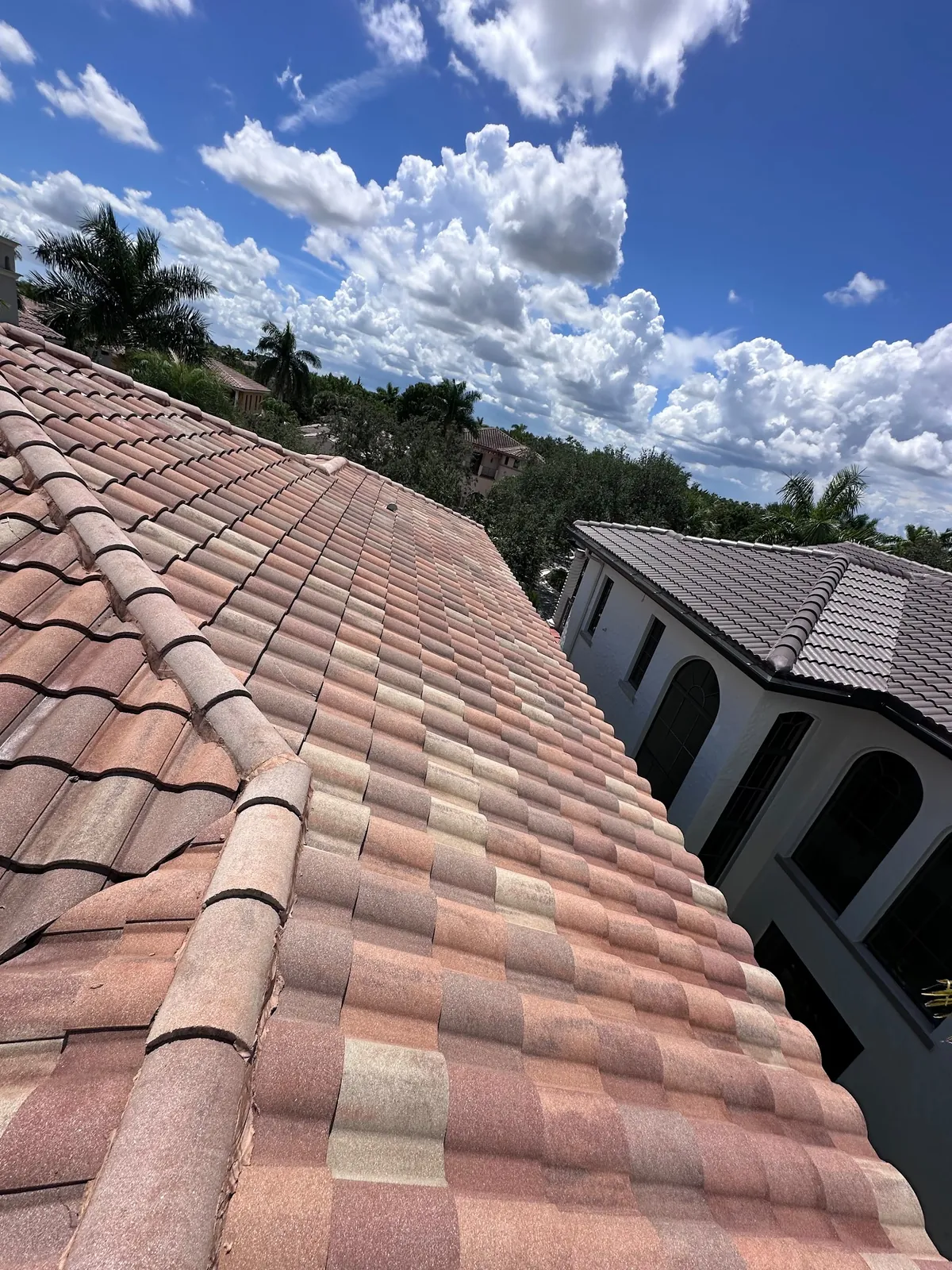
Picture a drop of water entering at a cracked tile near the ridge. It runs down the underlayment, along a rafter, across the top of the ceiling, and finally drips where the drywall dips at a seam or a light fitting. The stain you see might be some way from where the roof leak starts.
That is why a roofer starts outside and above the stain, then works up the slope. They look at the flashing, the vent boots, the valleys and the tiles or shingles in the path the water would take. A careful roofer checks the attic too, to follow the water trail back to its source.
What matters for an insurance claim in Florida
If you plan to claim, the order of steps matters.
- Report it promptly. Florida policies have deadlines for reporting a claim. Check your policy, and do not wait to see whether the stain spreads.
- Document before repair. Photos and video of the damage, inside and out, before anything is fixed. Keep damaged items until the adjuster has seen them, or photograph them in detail.
- Prevent further damage. Most policies expect you to take reasonable steps to stop the damage getting worse. Keep receipts for anything you buy or pay for.
- Know your roof. Insurers in Florida often ask about the age and type of the roof. Have any paperwork from the last replacement to hand.
- Get the cause in writing. A roofer’s written description of what failed and why helps the adjuster tell wear from sudden damage.
Your policy and your insurer decide what is covered. A roofer can describe the damage; they cannot tell you what your insurer will pay.
Florida specifics worth knowing
Many South Florida roofs are tile or shingle, with metal and flat roofs on some houses, additions and porches. Tile roofs shed water well, but the underlayment beneath them does the real waterproofing, and it ages out of sight. Shingles lift and tear in high wind. Heavy afternoon storms test every weak point at once, which is why a roof leak often shows up in summer after a dry spell.
How One Call fits in
One Call Home Pros is a connector and holds no roofing licence. Tell us where the water is showing, what kind of roof you have and whether you are planning an insurance claim. We match you with a vetted local roofer who is licensed and insured for the work. The roofer finds the entry point, explains it and makes the repair. One Call arranges it and stays with the job.
You pay One Call, and One Call pays the roofer. Ask what the price covers before any work starts. Financing is available for larger roof work; ask about it when you call. See roof repair for more, or the pages for roof repair in Parkland, Pembroke Pines and Pompano Beach.

Questions about a roof leak
Should I poke a hole in a bulging ceiling?
Keep clear of it rather than standing under it. Put a bucket below, switch off any light fitting in it, and leave the drywall to the pro if you are not sure.
Can a roof leak be fixed in the rain?
Roofers do not usually make lasting repairs on a wet roof. Ask the roofer what can be done to limit the water until it is dry enough to repair.
Why does it only leak in some storms?
Wind direction matters. Rain driven from one side gets under a lifted tile or loose flashing that stays dry in other weather.
Will insurance pay for my roof?
That depends on your policy and the cause. Report it, document it, and let the adjuster decide. The roofer can describe what failed.
Does One Call repair roofs?
No. A licensed, insured roofer from a local company does the work. One Call vets the roofer, arranges the visit and stays with you.
Get the leak found
Catch the water and take your photos. Then tell One Call where the water is showing, and we connect you with a vetted, licensed local roofer.