
When a whole neighbourhood was roofed at about the same time, the first leak on the street is rarely the last. If yours has started, deal with it while it is small. For roof repair in Pembroke Pines, One Call Home Pros puts you in touch with a vetted local roofer, licensed and insured for the job, who finds the cause and puts it right. One Call itself has no roofing licence and is not the contractor. The roofer does the work. One Call chooses them, handles the setting up and follows the job until the leak is gone.


Why Pembroke Pines homes need roof repair
Pembroke Pines is one of the largest cities in the county, and most of it was built from the 1980s onward, development by development. Alongside family suburbs of single-family houses there is a very large 55-plus community with its own condominiums and villas. Across both, a great many homes were built, and roofed, within a few years of each other.
That has a simple consequence. Roofs of the same type and the same age, under the same sun and the same storms, tend to wear out in the same window. Underlayment beneath tile dries out on one street after another. Shingles lose their grip across whole developments. Vent boots fitted in the same year crack in the same summer. When that window opens, there is an enormous volume of similar roofs needing work at once, and knowing what to look for, and when to call, makes a real difference.
What a Pembroke Pines roofer repairs
Leaks in heavy rain
A drip, a stain or a damp wall in a storm, traced along the roof to the point where water gets in.
Cracked and slipped tile
Concrete tile broken by wind or foot traffic, or slipped out of line, leaving the underlayment open.
Lifted and worn shingles
Shingles whose seal has failed, lifted or torn by wind, or worn bare of granules by the sun.
Flashing and pipe collars
Wall and valley flashing that has pulled away, and vent pipe collars that have split.
Roof edge repairs
Fascia gone soft behind the gutter and soffit that has sagged or dropped, opening the eaves to rain and rodents.
Storm records
Damage after high wind, documented in photos and writing for your insurer.
While the drip is still falling
Get a pail, a basin or a storage bin under the water and lay towels round it. Shift beds, sofas, rugs and anything electric away from the wet patch. Keep out from under a ceiling that has started to bulge. Flip the breaker off for any light, fan or socket close to the water. Photograph what you see, with the date.
Leave the roof to the pro, however low it looks. Then call One Call, or use the quote request, and say where the water is showing and what kind of home it is.
Your neighbour’s roof is a preview of yours
In a development where every house was built within a few years, a neighbour’s roof trouble tells you a great deal about your own. If the house next door has had its underlayment redone, or the street has seen a run of vent boot leaks, your roof is likely at the same point.
That is useful in two ways:
- It tells you what to watch for. If the problems on your street are at the valleys, or the boots, or the ridge, check your own ceilings below those parts of the roof after heavy rain.
- It tells the pro where to look. When you call about roof repair in Pembroke Pines, mention what you know about repairs on neighbouring houses. It can shorten the search for the leak.
It also means a repair now, while the problem is one area, is usually better than waiting for a second and third leak in the same season.
What roofs of this era show
Houses from the late 1980s and the 1990s here were mostly roofed in concrete tile or asphalt shingle. Many have been re-roofed once; some have not. At this stage of life, the same failures come up again and again.
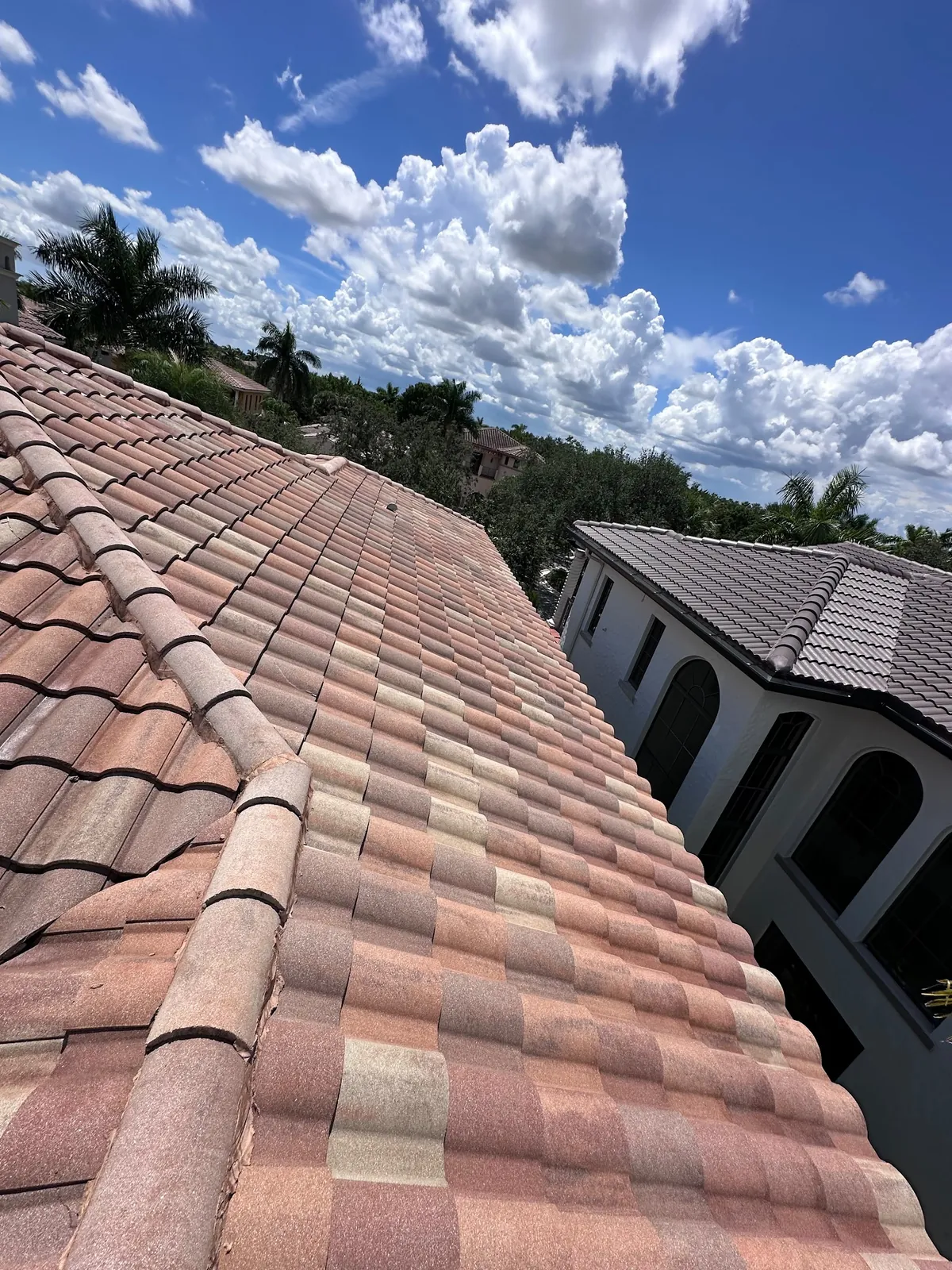
Tile roofs. The concrete tile itself is usually still sound. The underlayment beneath, which does the actual waterproofing, has spent a very long time in attic heat and becomes brittle. Once it cracks, any water that gets past a tile reaches the deck. The repair is to lift the tiles over the failing area, replace the underlayment there, and relay the tile with new pieces where old ones are broken.
Shingle roofs. Shingles of this age lose granules, curl at the edges and stop sealing down. Wind lifts the tabs and breaks them. Individual damaged shingles can be replaced while the rest of the roof is still pliable.
Both. Vent boots crack, flashing sealant dries out, and fascia at the eaves softens where gutters overflow.
Ask for pictures of whatever the pro finds up there, and ask them to say whether it is local or a pattern across the roof.
When many roofs need work at once
After a big storm, or simply when a whole area of the city reaches the same point, demand for roofers rises across the city all at once. One Call cannot promise a time, and nobody honestly can when demand spikes. What helps is being clear and ready:
- Describe the problem precisely. Where the water shows, which part of the roof is above it, what the roof is made of, and whether a storm came first.
- Protect the inside. Contain the water and keep it from spreading while you wait.
- Document everything. Dated photos inside and from the ground, and any debris kept.
- Have your paperwork ready. Any roof warranty, any past repair receipts, and your insurance details if it is storm damage.
- Know who owns the roof. In a condominium or a villa community, the association may be responsible.
A clear description lets One Call match the right roofer the first time, which is the quickest route there is. It also helps to say whether the leak is new or has been building for a while. A first stain after a single storm points to fresh damage, such as a lifted tile or a torn shingle. A stain that has grown slowly over several rains points to wear, such as tired underlayment or a cracked vent boot, and the pro plans the visit differently for each.
The 55-plus community
Pembroke Pines has a very large 55-plus community, with condominium buildings and villas. If your home is there, the first question is who looks after the roof.
Condominium buildings share their roofs, and the association looks after them and hires whoever works on them. A leak coming through an apartment ceiling should go to the management office as a written report, with dated pictures, and you keep a copy.
Villa sections vary. Under some documents the association handles every roof; under others, each owner handles the roof over their own home; a few split structure and covering between them. A quick call to the office settles it, and tells you whether work needs approval first.
Where the roof is your responsibility, One Call arranges the roofer from there. If you are calling on behalf of a parent or a relative, tell us who owns the home and who will be there to let the pro in.
Roof records worth keeping
Many homes here have changed hands since they were built, and the roof on a house may have been replaced by a previous owner. Before you call, look for anything that tells you about the roof: a permit card or record from a past re-roof, a contractor’s invoice, a warranty certificate, or notes from a home inspection when you bought the house. Some roof warranties can be transferred to a new owner; others cannot.
Those papers help in three ways. They tell the pro what is on the roof and when it went on. They may show whether a builder’s or installer’s warranty still applies to the leak. And they help with your insurer, who may ask about the roof’s history. If you have nothing, the city’s permit records for your address can sometimes fill the gap.
Solar panels on suburban roofs
Solar panels are common on the family suburbs’ wide, south-facing slopes. Each panel rack is bolted through the roof, and every bolt is a seal. Leaks at panel mounts are a known problem when the original flashing or sealant ages. A leak under a panel array can also be hard to reach without lifting panels.
If your stain sits under the panels, tell One Call when you call about roof repair in Pembroke Pines, and find your solar installer’s paperwork. The panel owner or installer may need to remove and refit panels so the roofer can reach the roof beneath, and that can affect the solar installer’s warranty.
Family suburbs and two-storey houses
In the family suburbs, many houses are two storeys, and many have grown since they were built: a covered patio tied into the main roof, a room added over the garage, a screen enclosure fixed to the fascia. Each change adds joins to the roof.
Common leak points on these houses:
- Where a lower roof meets the wall of an upper storey, along step flashing.
- Where a patio or porch roof ties into the main roof at a lower pitch.
- Valleys, especially those that collect debris from nearby trees.
- Vent boots over upstairs bathrooms.
- The fascia where a screen enclosure is fixed, which carries extra load and fasteners.
On a two-storey house, water can enter the roof and run down inside a wall, appearing on the ground floor. If you see damp downstairs with no plumbing nearby, check the ceiling above it upstairs and mention both places to the pro.

Attic heat in houses of the same design
Many developments here repeat a handful of house plans, so the same attic layout and the same ventilation sit under hundreds of roofs. Where that ventilation is poor, attic heat builds up on summer afternoons and cooks the underlayment from below, which is one reason roofs of one design can age together. Poor ventilation also lets damp air condense under the roof deck on cool nights, leaving drips that look exactly like a leak.
If the stains in your house appear on dry mornings rather than in rain, or the attic feels damp and stale, mention it. The pro can check the soffit vents, the ridge or roof vents, and whether a bathroom fan is blowing into the attic instead of outside.
Repair or the bigger conversation
This page is about repairs, and most roof calls end in one. On roofs reaching the end of their underlayment’s life, though, the pro may find that the failure is not in one spot but across much of the roof. They will tell you plainly, with photos.
At that point, you have choices to talk through: repairing the worst areas now, or looking at a full re-roof. A re-roof is a larger job, and the roofing pros One Call works with take it on as well as repairs. Some insurers also ask about the condition of a roof when a policy renews, so it is worth knowing where yours stands. Financing is available for the larger end of roof work; ask about it when you call.
After high wind
Storm damage here is mostly from wind. When it is safe, walk round the house and look at each slope from the ground. Scan for breaks in the lines of tile, bare patches where shingles used to be, ridge caps missing, flashing bent away from walls and soffit hanging loose. Gather any roofing debris and keep it. Inside, watch the ceilings for several days.
If you are in an association, report what you see on a shared or common roof to the management office, with photos. If part of the roof is open to the weather, the pro can put a temporary cover or tarp on before the repair. Do not climb up.
Paperwork that helps a claim
Storm claims rest on records. Making the claim is your business with your insurer; the roofer does not act as an adjuster. Keep together your dated photos from inside and from the ground, the roofer’s photos from the roof, and the roofer’s written description of what was damaged and what the repair involves. If many homes on your street were damaged in the same storm, note that too. Insurers deal with clusters of claims after a big storm, and clear, specific records stand out.
Permits and inspections
Repairs beyond small fixes need a building permit and an inspection in Florida, and Broward County’s wind rules are strict. The licensed roofer applies for the permit. On roofs from the 1980s and 1990s, the repaired section is brought up to current fastening and underlayment standards, which can mean opening a little more than the visible damage. Ask the pro where the edges of the repair will be. Roof repair in Pembroke Pines inside an association may also need the association’s approval before the permit, so check both.
From call to repair
- Call One Call. Say where the water is getting in, what the roof is covered with, who is responsible for it, and what you know about repairs on your street.
- The match. One Call picks a vetted roofer who already works in Pembroke Pines and is licensed and insured for that kind of roof.
- The inspection. The roofer finds the source, shows you what they found and explains the repair.
- Agreeing the work. You ask what the price covers and agree it before anything starts.
- The repair. Done by the licensed pro, with any permit they need.
- Afterwards. A drip that returns in a later downpour goes back to One Call, and we raise it with the roofer.
The homeowner pays One Call, and One Call settles with the roofer.
Next door, the same help is set up through roof repair in Davie and roof repair in Hollywood.
Questions from Pembroke Pines
Every house on my street seems to need roof work. Why now?
Many developments here were built and roofed within a few years of each other. Roofs of the same type and age wear out in the same window, so problems tend to appear across a street at once.
Is a repair worth it on a roof this age?
Often, if the damage is in one area. If the underlayment has failed across much of the roof, the pro will tell you, with photos, and you can talk through a repair now or a full re-roof.
I live in a 55-plus community. Do I arrange the roofer?
In a condominium, the association does. In villas, it depends on your governing documents. The management office can tell you who is responsible.
What should I have ready when I call?
Where the water shows, the roof type if you know it, who owns the roof, any installer’s warranty or past repair papers, and photos. It helps One Call match the right roofer first time.
Get the roof sorted
Say where the water is coming in and what sort of home it is. One Call lines up a vetted, licensed roofer for your Pembroke Pines home and sees the job through.