
On a large property, the first thing a roofer needs to know is how to get there and how to get equipment close to the house. The second is what is leaking. For roof repair in Davie, One Call Home Pros connects you with a vetted, licensed, insured local roofing professional and passes on the details that make the visit work: the gate, the drive, the ground and any animals. One Call is a connector, not a roofing company, and holds no roofing licence. The pro does the repair, and we set it up and keep watch over the job.
Why Davie homes need roof repair
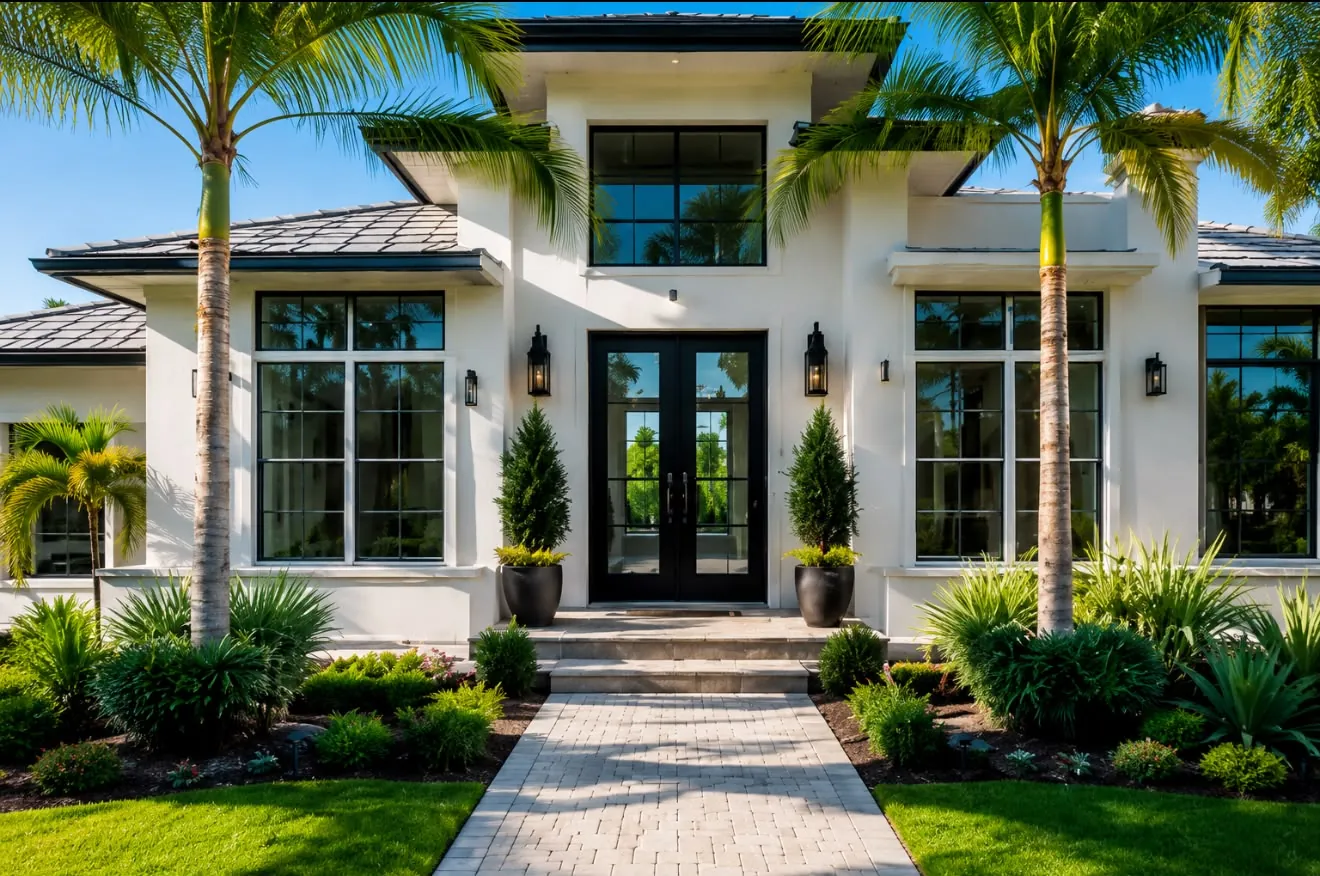
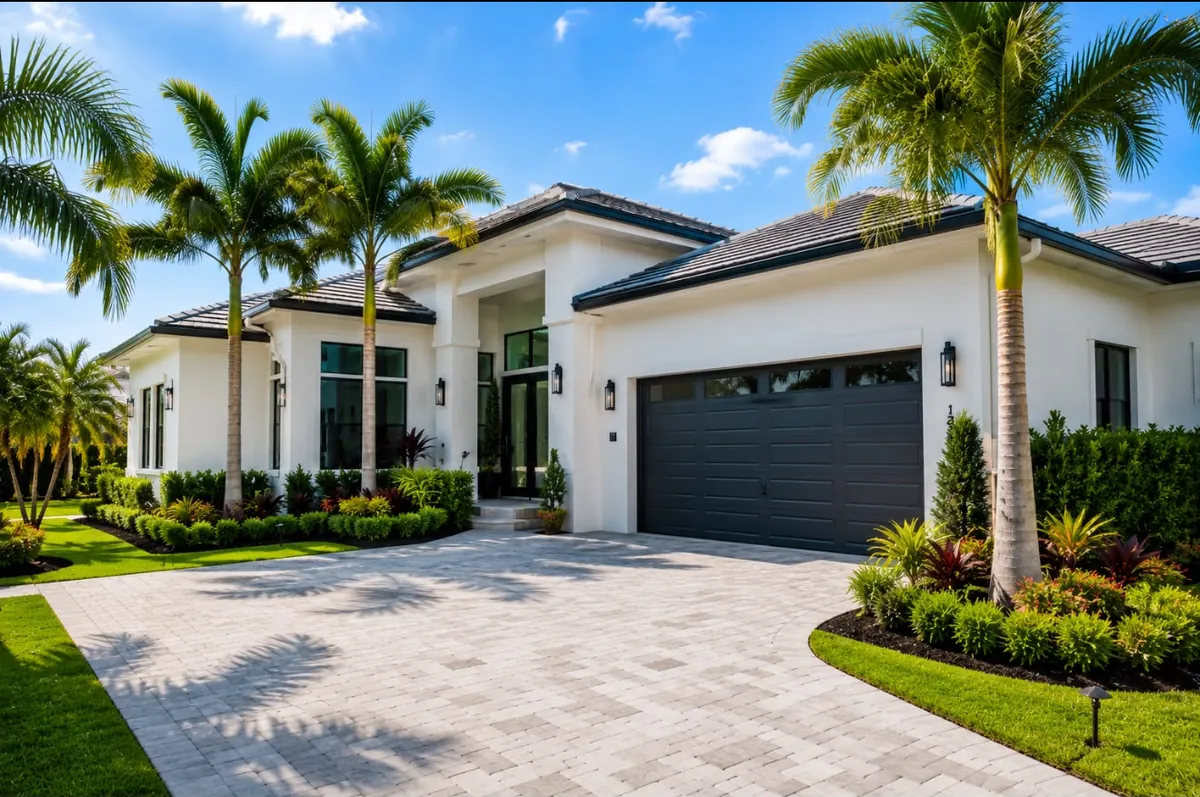
Davie is spread out, and parts of it are semi-rural. Many properties sit on large lots, some with agricultural zoning, and the town has a lot of land that reads more like the country than a suburb: paddocks, groves, long drives and homes set well back from the road. Plenty of homes still run on well and septic alongside those on town water, which tells you something about how far apart some properties are.
For roofs, that open setting matters in two ways. First, homes on wide, open lots meet the wind with little around them to break it, so edges, ridges and the side facing the open ground take more punishment. Second, getting a roofer, a ladder, a materials load and sometimes a lift to the house takes more planning than on a tight suburban street. Longer drives between properties also shape how visits are scheduled. A good match takes both into account.
Roofing problems a Davie pro sorts out
Leaks in rain
Water at a ceiling or down a wall in a storm, traced back to where it enters the roof.
Missing and cracked tile
Concrete and clay tile cracked, loosened or blown off by wind across open ground.
Shingles lifted by wind
Tabs folded back or torn away on exposed slopes, and older shingles worn smooth by sun.
Flashing and vent boots
Wall, valley and chimney flashing, and the collars around plumbing vents, cracked or lifted.
Eaves, fascia and soffit
Soft fascia boards and soffit panels pulled loose, where water and wildlife get into the roof space.
Storm write-ups
A photographed, written record of wind damage, for your insurer.
If the roof is leaking today
Work from the inside and keep your feet on the ground. Catch the drip in a bucket or a tub, set towels round it and move anything valuable away. If part of the ceiling has started to droop with water, close the door on that room. If water is near a light, fan or socket, turn that circuit off at the breaker. A few dated photographs now will help later, both with the pro and with any claim.
Then call One Call, or send the quote request. Along with where the water shows, tell us how to reach the house, which is the part of roof repair in Davie that is easy to forget and matters a great deal.
Getting the roofer to the house
On a compact suburban lot, a roofer parks at the kerb and walks to the wall. On many Davie properties it is not that simple. Before the visit, think through the route from the road to the part of the house that needs work:
- Gates and codes. If there is a locked gate, a keypad or a farm gate, tell One Call how the pro gets through, or arrange to meet them there.
- The driveway. Long, narrow, unpaved or soft drives limit what vehicle can get close. Mention it, especially after heavy rain.
- The ground by the house. A ladder needs firm, level footing. Soft lawn, raised beds or a septic area near the wall all affect where it can stand.
- Animals. Dogs loose on the property, horses in a paddock beside the drive, or livestock near the barn need to be secured before the pro arrives.
- Overhead lines. Power lines running to the house or outbuildings near the work area are a hazard for ladders and lifts. Point them out.
These details save a wasted trip and keep everyone safe. They also let the pro bring the right vehicle and equipment the first time.
Wind across open ground
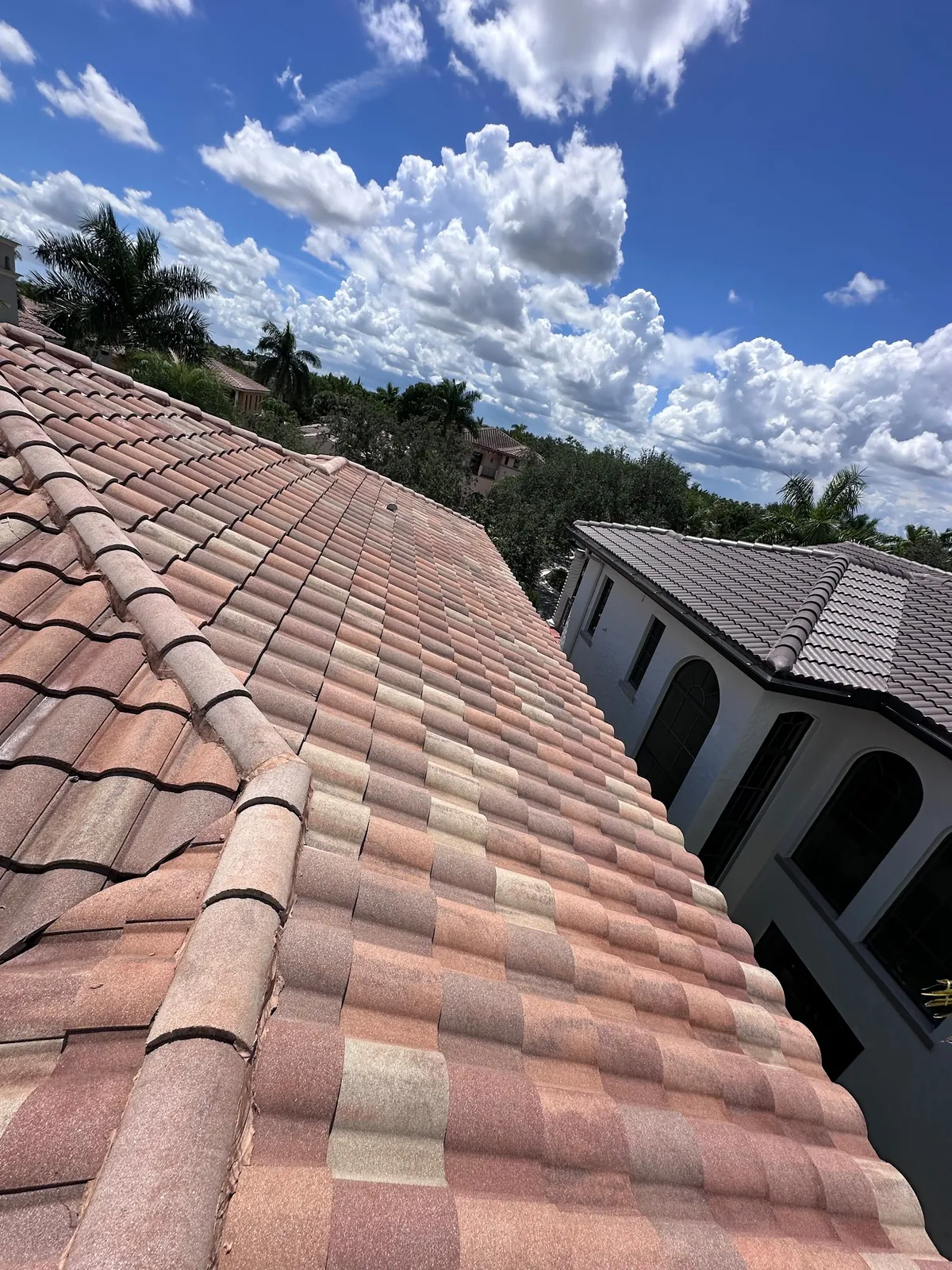
Homes in built-up neighbourhoods get some shelter from the houses around them. A home on a large, open lot gets very little. In a storm, wind runs across pasture and open land straight at the house, and the slopes and edges facing it carry the load.
What that does to a roof:
- Edge tiles and ridge caps on the windward side loosen first and can be carried off.
- Shingle tabs on exposed slopes fold back and tear along the nail line.
- Rain is driven sideways, up under tile laps and behind wall flashing, so leaks appear in storms that a sheltered roof would shrug off.
- Debris from the property, branches, fencing, loose items from a barn or yard, can be thrown onto the roof.
If you know which way the worst storms hit your house, say so when you call. The pro checks that side first.
Barns, stables and outbuildings
Agricultural zoning and large lots mean many Davie properties have more than one roof: a barn, a stable, a workshop, a detached garage, a pool house or a guest cottage. These roofs are often different from the house. Many are metal panel roofs, some are shingle, and some are low-slope.
Metal roofs on outbuildings have their own problems. Fasteners back out as the panels expand and contract in the heat, and the rubber washers under them dry and crack. Panels lift at the edges in wind. Rust starts at cut edges and around fasteners. Ridge caps and trim come loose.
Not every roofer works on metal panel roofs or on agricultural buildings. When you call, tell One Call what the outbuilding is, what the roof is made of and what is wrong, so the match fits. If the house and a barn both need work after a storm, say so, and we look for a pro who can take on both where that is possible.
Planning around distance
Properties here can be a fair drive from each other, and a roofer often plans a day’s route around them. That is worth knowing when you arrange a visit. It helps to:
- Give a clear address and, if the property is hard to find, a landmark or a note on which gate to use.
- Say which days and times someone can be there to open the gate and show the pro the problem.
- Mention if the job may need more than one visit, for example if tile has to be ordered.
None of this is about speed. It simply means that when the pro sets out, they can reach you, get in and get to work. If the property is let, or you are arranging the repair for a home you do not live in, give One Call the name of whoever will be there to meet the pro, and make sure they know where the leak is and how the gate works. A short note on the problem, left with that person, avoids a second visit just to find the right room.
Large single-storey roofs
Many homes on big lots are wide single-storey houses with long roof lines, deep eaves and covered porches or lanais running along one or more sides. A large, low roof has a lot of edge and a lot of surface, and its weak points are spread out:
- Long valleys where wings of the house meet.
- Joins where a porch or lanai roof ties into the main roof at a lower pitch.
- Many vent pipes, often for bathrooms at opposite ends of the house.
- Long runs of fascia and soffit, some on sides of the house you rarely see.
Roof repair in Davie on a house like this starts with narrowing down where to look. Tell the pro which room the water shows in, and which wing of the house it is.

Guest cottages, garages and pool houses
Beyond barns, many large lots carry smaller buildings that are lived in or used every day: a guest cottage, a detached garage with a room above, a pool house or a home office. These usually have house-style roofs in tile or shingle, but they are often built later than the main house, with different materials and less attention paid since. A leak in a guest cottage can go unnoticed for weeks if nobody sleeps there.
When you arrange roof repair in Davie for the main house, it is worth asking the pro to look over these smaller roofs while they are on the property. Tell One Call about them when you call, so the visit allows time for them.
Where the roof water goes
On a property with a septic system, roof water needs somewhere sensible to go. Gutters and downspouts that empty onto the ground over a septic drain field add water the field was not designed to take, and downspouts that empty next to the foundation keep the ground soft where a ladder needs to stand. Gutters that overflow behind the fascia rot the roof edge.
The roofer can repair the roof edge and tell you whether the gutters are part of a leak. Rerouting downspouts away from the drain field may be a gutter or drainage job rather than a roofing one. Ask the pro where their work stops.
Tile and shingle on exposed homes
Tile. Concrete and clay tile is heavy and sheds water well, but in strong wind across open ground, poorly fastened tile at edges and ridges can lift. The underlayment beneath is the waterproof layer, and once a tile is gone, sun and rain go straight to it. A repair means replacing the tile, checking the underlayment and deck in that area, and fastening the new tile to current standards.
Shingle. On exposed slopes, shingles take the brunt of the wind. The seal strip that holds each tab down loses its grip with age and heat, and the next gust lifts it. Individual tabs can often be replaced while the shingles around them still flex.
Lightning and open land
A house or barn standing alone on open land is more exposed to lightning than one in a row of similar buildings. A strike can crack tile, scorch shingle, blow a hole in a metal panel or damage a chimney or a vent stack, and the damage is not always obvious from the ground. If lightning has hit the property, or close to it, have the roof looked at even if nothing seems wrong, and mention the strike to your insurer. Any electrical damage inside the house is a separate question for an electrician.
Animals in the roof space
Open land around a house brings wildlife closer. Rats, squirrels, raccoons and birds look for a gap at the eaves, a loose soffit panel, a hole behind a rotten fascia board or a gable vent with a torn screen. Signs include scratching overhead, droppings in the attic and chewed material at the roof edge.
The roofer closes the gaps in the roof and eaves, replaces damaged soffit and fascia, and replaces chewed vent boots. Removing animals already inside is a job for a wildlife professional, and it needs to happen before the gaps are sealed. Mention it when you call.
After a storm on a large lot
Once the wind has dropped and the property is safe to walk:
- Check the house first, then each outbuilding. Look at every slope you can see from the ground.
- Look for missing tile, folded shingles, metal panels lifted at the edges, and flashing bent away from walls.
- Walk the property for roof debris and keep it.
- Check for fallen fencing or branches near the house before anyone brings a ladder in.
- Watch ceilings in the house for several days.
If part of a roof is open, the pro can put a temporary cover or tarp on it before the repair. Do not climb up yourself, on the house or on a barn.
What to keep for the insurer
Storm damage across a large property can involve several buildings, and your insurer will want to see each one. The claim is yours to make with them, and the roofer does not act as your adjuster. Keep your own dated photos of every building, from the ground and inside. Ask the roofer for photos from each roof and a written description of the damage and the repair, building by building. Check your policy for how it treats outbuildings, barns and other structures, since they may be covered differently from the house.
Permits
Roof work beyond small fixes needs a building permit and an inspection in Florida, and Broward County’s wind rules are among the strictest in the state. The licensed roofer pulls the permit. Agricultural buildings may be treated differently from homes for permit purposes, so ask the pro how it applies to any barn or outbuilding involved.
How One Call sets up the job
Here is the order of things once you call:
- You describe the problem, the roof type, and every detail about reaching the house.
- One Call matches a vetted roofer, licensed and insured for the roof involved, who works in Davie.
- The pro arrives with what they need for your property, inspects and explains the repair.
- You ask what the price includes and agree it before work begins.
- The repair is done, with a permit pulled by the licensed pro where one is needed.
- If the next storm shows a leak, tell One Call and we raise it with the pro.
Payment runs through One Call: you pay One Call, and One Call pays the roofer. Financing is available for larger roof work; ask about it when you call. If the pro finds that a roof has failed beyond repair, they will say so, and the roofers One Call works with do full re-roofs as well as repairs.
One Call arranges the same help nearby, through roof repair in Plantation and roof repair in Pembroke Pines.
Questions from Davie
My property has a gate and a long drive. What should I tell One Call?
How the pro gets through the gate, whether the drive suits a work vehicle, where a ladder can stand near the house, and whether any animals need securing. It saves a wasted trip.
Can the same pro repair my barn roof?
Possibly. Many barns and outbuildings have metal panel roofs, and not every roofer works on them. Tell One Call what the building is and what its roof is made of, and we match with that in mind.
Why does my roof take more storm damage than houses in town?
Homes on open land have little to break the wind. Edges and ridges facing open ground take the strongest gusts, and rain is driven harder under tile and flashing.
Will my insurer cover the outbuildings too?
That depends on your policy. Photograph each building, ask the roofer for a written description of each one’s damage, and check how your policy treats other structures.
Arrange the roof repair
Tell us what is leaking and how to reach the house. One Call matches you with a vetted, licensed roofer for your Davie property and follows the job through.