
Start with what you can see: where the water shows, when it appears, and what kind of home you are in. That is enough to get the right roofer moving. For roof repair in Coconut Creek, One Call Home Pros matches you with a vetted, licensed, insured local roofing professional who inspects the roof and carries out the repair. One Call is a connector, not a roofing contractor, and holds no roofing licence. We set it up, vet the pro and stay on the job from your first call to the finished work.
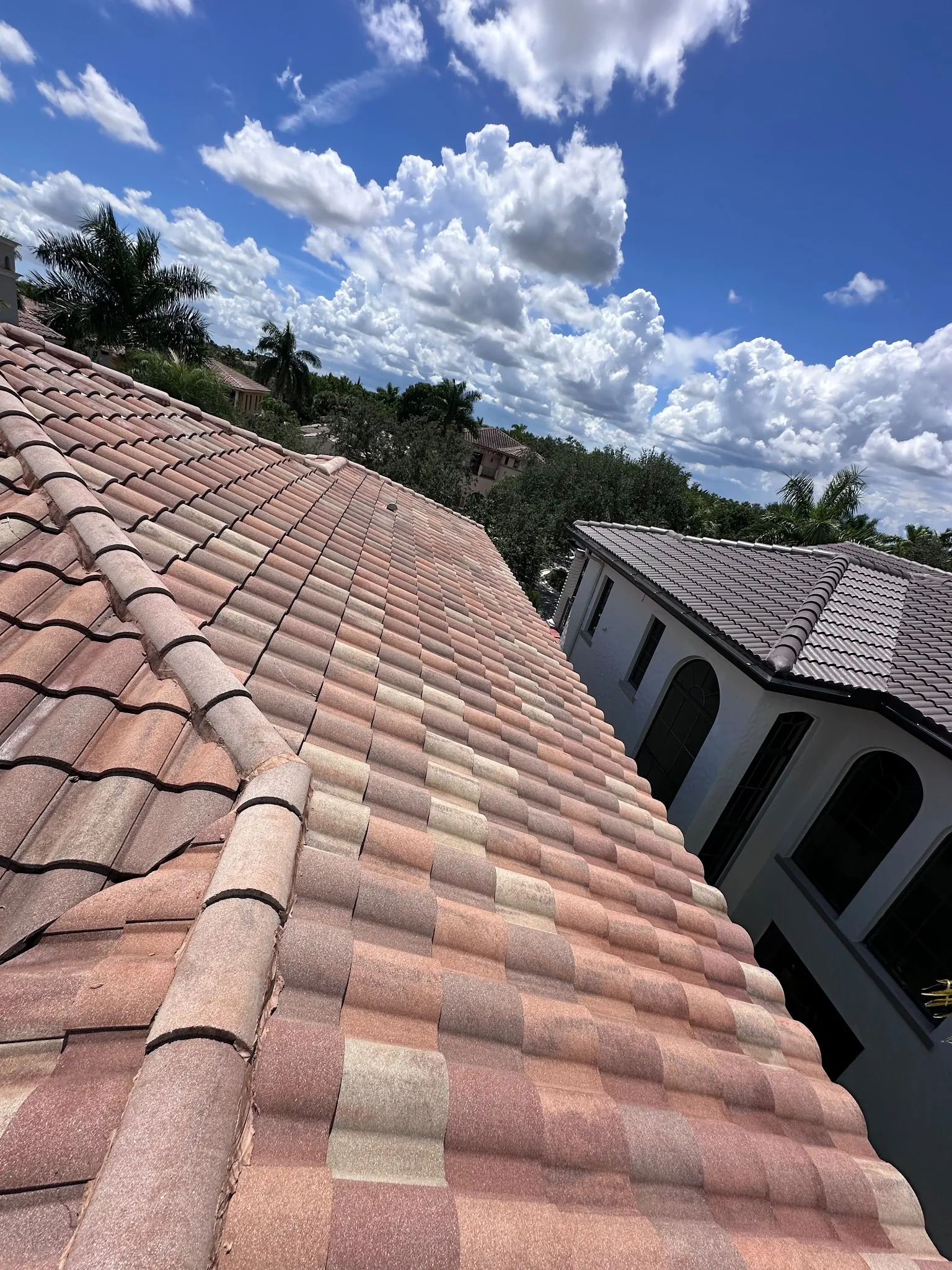

Why Coconut Creek homes need roof repair
Most of Coconut Creek’s housing went up in the 1980s and 1990s. The single-family houses from that era are now carrying roofs that have seen a great many summers, and in many cases a replacement roof that is itself getting on. Alongside them sits a large share of condominium and townhouse communities, where one roof can cover several homes and an association makes many of the decisions.
That second point shapes roof work here as much as the age of the roofs does. Association rules often decide who may come onto the property, when work can happen, and who is allowed on a shared roof at all. A roof repair can be held up for days by a missing approval or a gate pass. A pro who works in these communities expects that, and One Call helps you sort out who needs to agree before anyone sets a ladder against the wall.
Roof work we arrange in Coconut Creek
Leaks in a storm
A stain or drip that comes with heavy rain. The pro finds the point of entry, which is rarely right above the wet patch.
Cracked and missing tile
Concrete tile that has cracked, slipped or blown off, leaving the underlayment exposed to sun and rain.
Shingles lifted by wind
Torn, creased or missing asphalt shingles, and older shingles that have shed their granules.
Flashing, boots and vents
Flashing at walls and valleys, and the boots around vent pipes that crack in the heat.
Eaves and roof edge
Rotted fascia and loose or broken soffit panels, where water and animals get into the roof space.
After the storm
Wind damage documented with photos and a written description for your insurer and, where it applies, your association.
First, keep the water contained
You can do a lot from inside without any risk. Set a bucket or a large pot under the drip and put towels down around it. Move bedding, rugs, electronics and paperwork out of the way. If a patch of ceiling is swollen and heavy, keep people and pets out of the room. If water is anywhere near a light fixture, switch that circuit off at the breaker. Photograph everything with the date showing. Leave the roof alone, wet or dry.
If you live in a townhouse or condo, also tell the neighbour on each side. Water from a shared roof can reach more than one home, and they may be seeing the same thing.
Who is responsible for the roof
Before a roofer is booked, it is worth being clear about who owns the roof over your head. In Coconut Creek there are three common situations.
A detached single-family house. The roof is yours. Call One Call and we arrange a roofer. If you are in a community with an association, check whether it reviews roof materials or wants notice of work.
A townhouse. It varies by community. In some, each owner is responsible for the roof over their own unit. In others, the association maintains every roof. Your declaration and the association’s rules say which, and the management office can tell you quickly.
A condominium. The roof is almost always a common element, maintained by the association, which chooses the roofer. Report the leak to management in writing, with photos and the date.
If the roof turns out to be yours, roof repair in Coconut Creek with One Call starts with one call. If it belongs to the association, start there, and keep a copy of your report.

Working around association rules
Association rules are not there to slow you down, but they do shape the timetable. Here is what commonly comes up, and how to get ahead of it:
- Gate access. Gated communities often need the contractor’s name and vehicle in advance. Ask the pro for the details once the visit is arranged and pass them to the gate.
- Permitted hours. Many communities limit contractor work to certain days and times. Tell One Call about any limits when you call so the pro can plan around them.
- Notice to neighbours. On a shared roof, the association may want neighbours told before work starts, or may want to tell them itself.
- Material approval. If tile has to be replaced, the association may need to approve the colour and profile, especially on rows that should look uniform.
- Proof of insurance. Some associations want the contractor’s insurance certificate on file before work begins. The pro holds that insurance, and One Call can send the certificate to the management office for you.
None of this is unusual. Sorting it before the repair date avoids a pro turning up to a closed gate.
Roofs from the 1980s and 1990s
Houses from these decades in Coconut Creek were mostly built with concrete tile or asphalt shingle roofs. Many have been re-roofed once since. Whatever is up there now, a few patterns are common at this age.
On tile roofs, the tiles themselves usually outlast what is under them. The underlayment, the felt or membrane that sits beneath the tile, is the actual waterproof layer, and it dries and cracks in the attic heat. When it fails in one area, water that gets past a cracked or shifted tile has nothing to stop it. A repair often means lifting tiles over the damaged section, replacing the underlayment there, and relaying the tiles, with new ones where the old are broken.
On shingle roofs, the sun is the main enemy. Shingles go brittle, lose granules and stop sealing down. A strong gust then lifts a tab and breaks it. A few damaged shingles can usually be replaced individually if the surrounding roof is still flexible enough to work with.
Either way, the pro will tell you whether the damage is local or part of a wider pattern. Ask them to show you photos of what they saw.
Larger repairs in Florida need a permit and an inspection, and the licensed roofer applies for it, not you. Broward County falls inside the state’s High-Velocity Hurricane Zone, which sets strict rules for how underlayment and tile are fastened, so a repair on an older roof is done to today’s standard rather than the one it was built to. If your association also wants to see the permit or the inspection result, ask the pro for a copy once it is signed off.
Townhouse rows share more than walls
On a townhouse row, the roof runs across several homes. Water does not stop at the line between two units. A cracked tile over your neighbour’s bedroom can show up as a stain in yours, and a repair on one section can affect the tiles and flashing on the next.
The places where leaks start on these rows are fairly consistent:
- Where the roof steps up or down between units of different heights, with flashing against a wall.
- Along the line of a fire wall or party wall, if it rises through the roof.
- At valleys where a front gable meets the main roof.
- Around vent pipes, one or more for every unit.
Because of this, a townhouse roof repair can involve more than one owner, or the association, even where each owner is responsible for their own section. A pro may need access to the neighbouring section to finish the job properly. Talk to your neighbour early.

Leaks that only show in some weather
A leak that appears in every rain is usually easier to find than one that comes and goes. On roofs of this age, an intermittent leak often has a pattern worth noting before the pro arrives:
- Only with wind from one direction. Rain is being driven under a tile, a flashing or a ridge on that side of the roof.
- Only in long, heavy downpours. A valley or a low-slope section is overflowing, or a gutter is backing up behind the fascia.
- On dry, cool mornings. That may be condensation in the attic rather than a roof leak at all, often linked to poor ventilation or a bathroom fan venting into the roof space.
Keep a short log of when the drip appears and what the weather was doing. It saves inspection time and points roof repair in Coconut Creek at the right part of the roof from the start.
Screen enclosures and patio roofs
Many single-family houses from the 1980s and 1990s have a screened pool enclosure or a covered patio fixed to the house at the roof edge. Where the enclosure frame or the patio roof attaches to the fascia, it adds weight and fasteners to a board that also carries the gutter. Over time the fascia behind that join can rot, and water can find its way along the fasteners into the eaves.
A patio roof tied into the main roof is also a common place for a leak, because it usually sits at a lower pitch and meets the main roof along a flashing line. If your stain is in the room next to the patio or pool, mention it. A roofer can repair the roof side of the join. The enclosure frame itself is usually a separate trade, so ask the pro where their work stops.
Vent pipes and roof penetrations
Pipe boots are a frequent cause of slow leaks on roofs of this age. The rubber collar that seals around each plumbing vent goes hard in the sun and splits. Water then follows the pipe down into the wall or ceiling, and the stain often appears in or near a bathroom.
Other things pass through the roof too: kitchen and bathroom exhaust vents, attic fans, satellite mounts. Each one is a seal that can fail. Mention anything you know of when you call. On a townhouse row, every unit has its own set, so a shared roof can carry a long line of boots and vents, each one a possible source. A careful pro checks the ones near your stain first and then looks along the row for others that are close to failing. Replacing a boot is one of the smaller jobs in roof repair in Coconut Creek, and it is often the whole answer to a stubborn bathroom stain.
Checking after a storm without climbing
Wind is the usual cause of storm damage on roofs here, and it tends to hit ridges, edges and the side of the house facing the wind. After the weather clears, check from the ground:
- Stand back far enough to see each roof slope. Look for gaps in the tile pattern or dark patches where shingles are missing.
- Look along the ridges and hips for caps that have moved.
- Check the eaves for soffit panels that have dropped or blown out.
- Pick up any pieces of tile, shingle or metal in the yard and keep them.
- Over the next several days, watch the ceilings, especially in closets and corner rooms.
If your townhouse or condo shares the roof, report anything you see to the association as well. If a section of roof is open, the pro can put a temporary cover or tarp on it until the repair. Never go up on the roof yourself to look.
Paperwork for the insurer and the association
After storm damage, two parties may want a record: your insurer and your association. The claim is between you and your insurer, and the pro is not an adjuster. What helps both is clear documentation:
- Your own dated photos from the ground and from inside.
- The pro’s photos from the roof, which only they can safely take.
- A written description of the damage and of the repair, including the materials used.
Keep copies together. If the association needs to approve materials, the same description usually covers what it asks.
Soffit and fascia on the roof edge
The roof edge is where water leaves the roof, and it takes a beating. Fascia boards rot when gutters overflow behind them. Soffit panels warp or come loose in the heat. Once there is a gap, rats, squirrels and birds use it. On townhouse rows, a gap at one end can let animals travel along the roof space above several homes.
The pro replaces rotted fascia, refits or replaces soffit, and checks the drip edge so water leaves the roof cleanly. In an association, the finish colour may need to match the community, so ask what the pro will use.
How a roof repair comes together
- You call One Call and tell us where the water shows, what kind of home you are in, who is responsible for the roof if you know, and any association rules on access.
- We match a roofer, vetted, licensed and insured for your roof type, who works in Coconut Creek.
- The visit is arranged around your community’s rules, with gate details passed on as needed.
- The pro inspects, finds the source and explains the repair before anything is done.
- You agree to the work and ask what the price covers. A permit, where needed, is the licensed pro’s job.
- The repair is done, and if the next heavy rain shows a drip, you tell One Call and we follow it up.
You pay One Call for the job, and One Call pays the pro. For larger roof work, financing is available; ask about it when you call. If the pro finds the roof has failed across a wide area, they will tell you, and the roofers One Call works with take on full re-roofs as well as repairs.
Roof repair in Coconut Creek sits between two neighbours where One Call arranges the same work: roof repair in Margate and roof repair in Parkland.
Questions from Coconut Creek
Is the roof over my townhouse my responsibility?
It depends on your community. Some make each owner responsible for their own section, others have the association maintain every roof. Your declaration says which, and the management office can confirm it.
My association wants details before work starts. What will they ask for?
Commonly the contractor’s name and vehicle for the gate, the dates and times, proof of insurance, and the tile colour and profile if any tile is being replaced. The pro can supply the details about the work.
The leak is in my unit but the damage may be over my neighbour’s. What now?
Tell your neighbour and, if the roof is shared, the association. Water travels across a shared roof, and the pro may need access to the next section to repair it properly.
Will the repair match the rest of the row?
The pro works to match tile colour and profile, and the association may need to approve them. Sun fading means a new tile can look slightly different at first.
Get the roof looked at
Tell us where the water shows, what kind of home you have and who looks after the roof. One Call matches you with a vetted, licensed roofing professional in Coconut Creek and stays with the job.