
If a ceiling in your home is wet or stained, the first job is to protect the room and the second is to work out who looks after the roof above it. For roof repair in Tamarac, One Call Home Pros connects you with a vetted, licensed, insured local roofing professional, and helps you through the association step that often comes first. One Call is not a roofing contractor and holds no roofing licence. The pro does the work. We arrange it, check the pro and stay with it until the roof is right.


Why Tamarac homes need roof repair
Tamarac has a large share of 55-plus communities, with condominium buildings and villa developments sitting alongside streets of single-family houses. A great deal of it dates from the 1970s, and original materials from that era are still common: original plumbing and electrical in the walls, and, on the roof, original framing and decking under whatever covering has been added since.
The other constant here is the association. In many Tamarac communities, approval is needed before work starts, and in many the association, not the owner, is responsible for the roof. A villa roof often runs across several homes. A condo roof is almost always common property. Getting the order right, who to tell, who approves, who books the roofer, saves days of waiting with a bucket on the floor.
Roof repairs a Tamarac pro takes on
Leaks and drips
Water through a ceiling or down a wall in rain. The pro traces it along the roof to where it actually gets in.
Broken tile
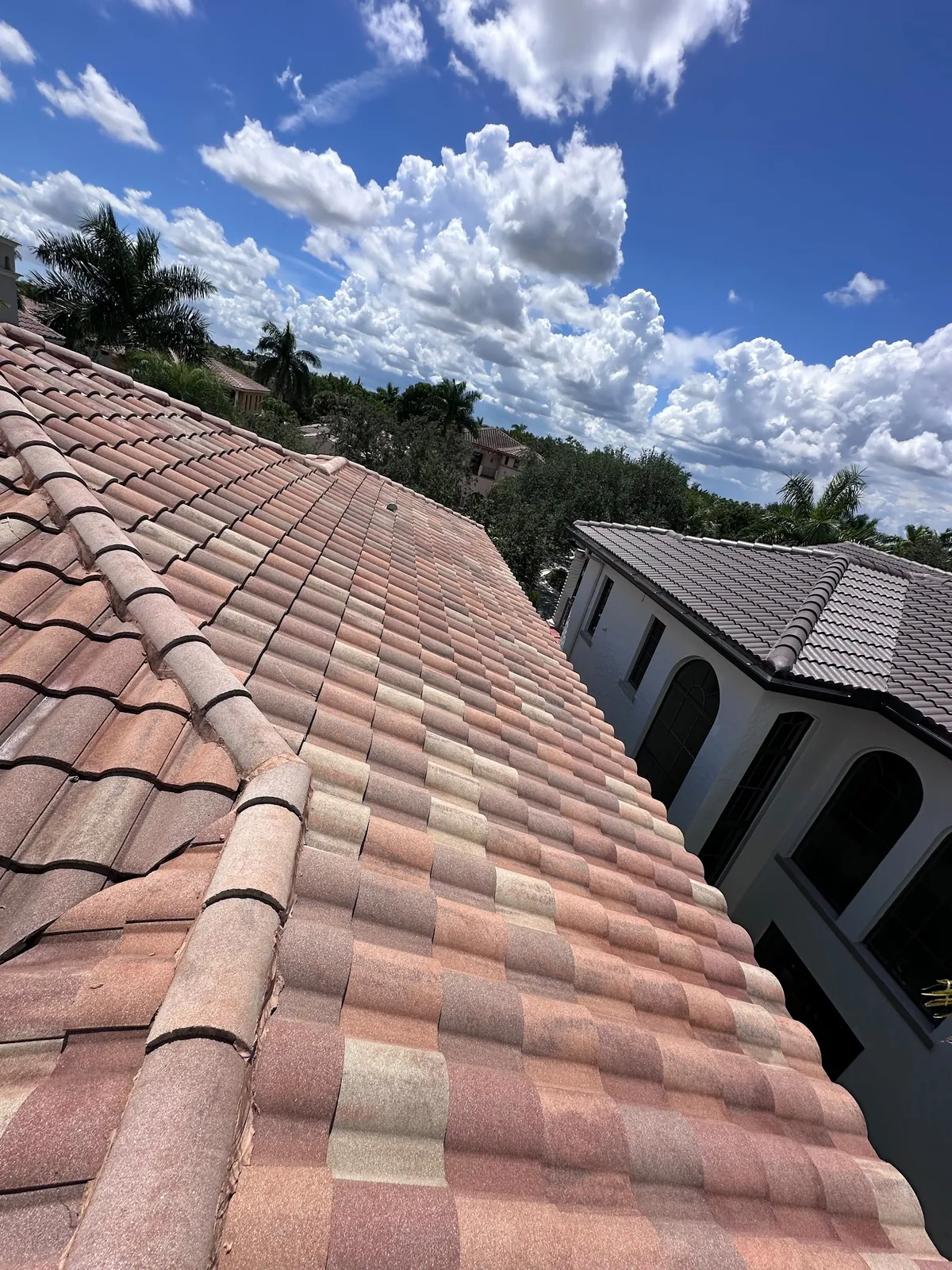
Cracked, slipped or missing concrete and clay tile on sloped roofs, and the underlayment exposed beneath.
Damaged shingles
Shingles torn or lifted by wind, and older shingles worn thin by the sun.
Flashing and vent boots
Metal flashing at walls and roof joins, and the seals around plumbing vents, often decades old on this housing stock.
Fascia and soffit
Rotted fascia and loose soffit at the eaves, a common way for water and animals to get in.
Storm and wind damage
Damage after high wind, photographed and written up for your insurer and your association.
Protecting the room in the meantime
While you wait for a roofer, the goal is simply to keep the damage inside small. Nothing here needs a ladder:
- Set a bucket or a deep tray under the drip, with towels to catch splashes.
- Slide furniture, rugs and anything precious out of the wet area.
- If the ceiling is bowing with water, leave it alone and keep clear of it.
- Turn off the breaker for any light or fan near the water.
- Take dated photos of the stain and of anything that got wet.
Please do not climb onto the roof, and do not stand on a chair to push at a wet ceiling. Falls are the real danger in a roof leak, far more than the water.
Check who is responsible first
Before booking anyone, find out whether the roof is yours. In Tamarac this is the question that most often decides what happens next.
Condominium apartments. The roof is a common element. The association maintains it and hires the roofer. Your job is to report the leak promptly, in writing, with photos.
Villas and attached homes. It depends on the community. Some villa associations maintain every roof. Some make each owner responsible for the roof over their own home. Some split it, with the association handling the structure and owners the covering. Your governing documents set it out, and the management office can tell you quickly.
Single-family houses. The roof is usually yours, though a homeowners association may still want to approve materials or contractor access.
If the roof is yours, call One Call and we arrange the roofer. If it is the association’s, start with the management office. If you serve on a board or manage a community and need a licensed roofer for the buildings, One Call can help with that too.
Getting association approval
Many Tamarac associations require approval before work starts on the outside of a home, and the roof is the outside of a home. The steps are usually straightforward, but they take time, so start early:
- Ask the management office what the rules require. Some want an application form. Some want only notice. Some have set contractor hours and days.
- Have the pro inspect. You need to know what the repair involves before you can describe it.
- Collect what the association asks for. Typically the scope of the repair, the materials and colour, the contractor’s licence and insurance details, and the expected dates. The pro supplies the details about the work and their own credentials, and One Call can send the pro’s insurance certificate and the approval paperwork to the association for you.
- Submit and wait for the answer. Ask the office how long reviews usually take in your community.
- Book the repair once approval is in hand. Pass gate or access details to the pro.
When you call One Call about roof repair in Tamarac, tell us if approval is needed. The pro then knows to provide the paperwork your association will want.
Roofs on 1970s construction
Very few roofs from the 1970s are still on their original covering. What is often original is everything underneath: the trusses or rafters, the decking, sometimes the flashing that was reused at the last re-roof. Those parts set the limits of a repair.
What a pro commonly finds on this age of house:
- Decking that has been wet before. Slow leaks over the years can soften plywood or plank decking around vents and valleys. New roofing fastened into soft decking does not hold.
- Reused flashing. Older metal at walls and chimneys may have been left in place when the roof was replaced, so it can be much older than the tile or shingle around it.
- Mortar-set tile and ridge caps. Older tile roofs often relied on mortar, which cracks and lets go over time.
- Low-slope sections. Many villas and older houses have flat or nearly flat roofs over porches, carports or the whole building, with built-up or gravel surfaces.
Original 1970s roofs were also built before the stricter wind rules that now apply across Broward County. When a pro repairs a section today, the new work has to meet current fastening and underlayment standards, which can mean a little more is opened up than you expect. Ask the pro to explain where the edges of the repair will be, and why.
None of these automatically means a new roof. They mean the repair needs to reach the real cause. Ask the pro to show you photos of what they found.
Villa roofs that run across several homes
On a row of villas, one continuous roof often covers two, three or four homes. That makes villa roof leaks different from those on a detached house.
Water travels. A broken tile above the next home can drain along the underlayment and show up in your ceiling. A repair to one section may need tiles lifted on the section beside it. The flashing where a party wall meets the roof serves both homes. All of this means a villa roof repair often involves more than one owner, or the association, even when each owner is responsible for their own section.
If you are in a villa:
- Tell your neighbours when you find a leak. They may have noticed something too.
- Find out whether your section of roof is your responsibility before booking.
- Expect the pro to need access to the neighbouring section, and arrange it in advance.
- If tile is replaced, the association may require it to match the row.
Flat and low-slope roofs
Some villa developments and many older single-family houses have flat or low-slope roofs over part or all of the building. These do not shed water the way a pitched tile roof does. Water lingers, and the weak points are the seams, the edges and the drains or scuppers that let water off.
Common problems on these roofs include blisters in the surface, splits at seams, ponding where the deck has sagged, and blocked drains. The pros One Call works with take flat roofs. Repairs are a different skill from tile or shingle work, so tell One Call if your roof is flat, or if the leak is under a flat section. The match depends on it.

If you are arranging this for someone else
If you are calling on behalf of a parent, a relative or a friend, that works fine. Tell One Call who owns the home, who should be contacted about the visit, and who will be there to let the pro in. If the owner wants to be part of the conversation about the repair, the pro can explain it to them directly, and you can both ask what the price covers before anything is agreed.
If the home is in a gated community, check with the owner or the office how the gate handles visitors, so the pro is not turned away at the entrance.
Water near original wiring
Original 1970s electrical is still common in Tamarac homes, and a roof leak that reaches it deserves more caution than one that drips onto a carpet. Water running down inside a wall can reach outlets, switches and junction boxes. Water pooling above a ceiling can reach a light fitting or a fan box.
If you see water near anything electrical, switch off that circuit at the panel, or the main breaker if you are unsure which one it is and can reach it safely. Do not touch a wet outlet or switch. Tell One Call about it when you call. The roofer stops the water. If the wiring itself got wet, an electrician should check it once things have dried, and the roofer can tell you whether that looks necessary.
If the home sits empty for a while
If you are away from your home for weeks or months at a time, a small roof leak can run unnoticed through a whole rainy season. Before you leave, it is worth having someone you trust look in after heavy storms, and look at the ceilings in every room, including closets. If you return to a stain, photograph it before cleaning anything, and note when you last saw the room dry. That date can matter to an insurer.
A pro can also look over a roof before a long absence, checking the vent boots, the flashing and any tiles that have moved, so a minor fault is dealt with while you are still there to agree the work.
Once the wind drops
High wind does most of the storm damage to roofs in this part of the county. It peels shingles back from the edge, rocks ridge tiles loose, bends flashing off walls and pulls soffit out of its channel. When it is safe to go outside, walk round the home and look up from a distance. Note any slope where the pattern of tile or shingle is broken. Gather pieces of roofing from the lawn, the walk or the patio, and put them aside rather than throwing them away.
Wind-driven rain can take several days to show on a ceiling, so keep checking indoors. On a shared villa roof or a condo building, send what you find to the management office, photos included. If a part of the roof has been left open to the weather, the roofer can put a temporary cover or tarp on it until the full repair. Climbing up is not something to try yourself.
A record your insurer can use
Storm claims hinge on records. Your claim is yours to make with your insurer; the roofer does not act as an adjuster. Three things make the record strong: your own photos, dated, from indoors and from the ground; the roofer’s photos taken on the roof itself; and a short written account from the roofer of what was damaged and how it will be put right. Keep copies of all three, and send the association the same set if the roof is shared.
Fascia, soffit and the gaps between
At the eaves, older homes show wear early. Fascia boards soften where gutters overflow, and soffit panels warp in the heat until they drop out of their track. On a villa row, an opening at one home’s eave can let rodents into a roof space that continues over the next home. Rotten board is cut out and replaced, soffit is refitted or renewed, and the drip edge is checked so rain falls clear of the wall. Communities with an association usually set the paint colour for this trim, so confirm it with the office before the roofer orders anything.
From the first call to the finished roof
- Your call. Say where the water is, whether it is a condo, a villa or a house, who maintains the roof and whether the association must approve work.
- The match. One Call chooses a vetted roofer, licensed and insured for your type of roof, who works in Tamarac.
- The inspection. The roofer finds where water gets in and explains the fix before starting.
- The approvals. The roofer gives you what the association asks for. Any permit is pulled by the licensed pro.
- The repair. Work goes ahead once the approvals are in place.
- The follow-up. If heavy rain shows the leak is still there, let One Call know and we pick it up with the pro.
Payment runs through One Call: you pay One Call, and One Call pays the roofer. Before you agree, ask exactly what the price includes. Financing is available for bigger roof jobs; ask about it when you call. Where a roof has worn out beyond repair, the roofer says so, and the roofers One Call works with take on full re-roofs as well as repairs.
Roof repair in Tamarac works the same way as it does for the neighbouring towns, with roof repair in Margate and roof repair in Sunrise.
Questions from Tamarac
Water is coming through my condo ceiling. Who arranges the roofer?
The association, in nearly every condominium, because the roof is common property. Send the management office a written report with dated photos as soon as you find the leak, and keep your copy. A prompt report also helps if water damage inside the unit later becomes a question for insurance.
Must the association approve the work before the roofer starts?
In many communities here it must. The office can tell you what the application needs. The roofer supplies the scope, the materials and proof of their licence and insurance.
My villa roof is joined to the neighbours’. Can only my part be repaired?
Usually, if that section is yours to maintain. The roofer may still need to work on the edge of the next section, and the association may insist the tile matches the row, so speak to the neighbours first.
Can I set up the repair on behalf of a parent?
Yes. Let One Call know who owns the home, who should be contacted and who will open the door. Your parent can talk the repair through with the roofer if they wish.
Ready when you are
Say where the water is and what sort of home it is. One Call finds a vetted, licensed roofer for your Tamarac home, handles the arrangements and keeps watch on the job until the roof is dry.