
No water from the taps on a property with a well usually means no power to the pump. Check the pump’s breaker in the panel first, then any separate switch or box near the well. If the breaker has tripped and trips again when you reset it, leave it off. That is a job for a professional, and for electrical in Davie, One Call Home Pros arranges the right one. One Call is a connector, not an electrical contractor, and the licence always belongs to the pro. You describe the problem, we match you with a vetted local electrician who is licensed and insured for it, and we keep the job moving until it is finished.

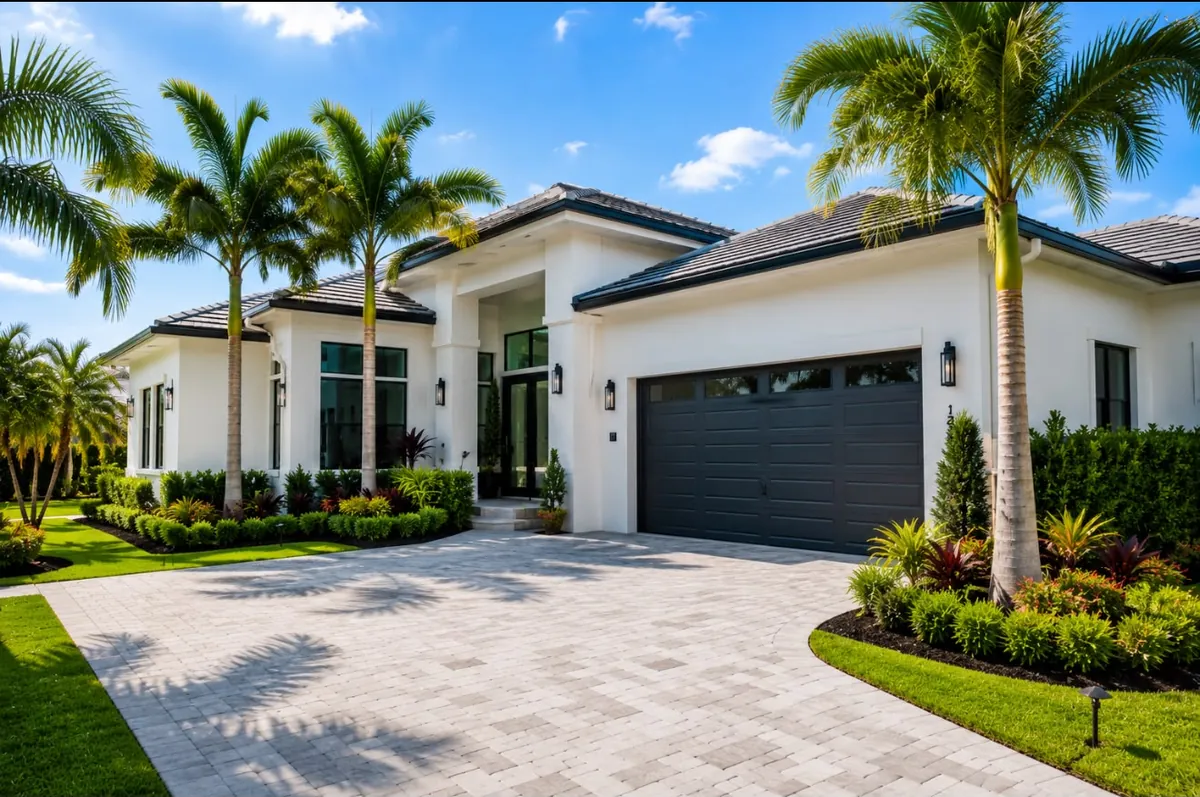
Why Davie homes need electrical work suited to larger lots
Parts of Davie are spread out and semi-rural, with large lots and agricultural zoning, while other parts are suburban streets on town water. On the larger properties, wells and septic systems are common alongside the house, and so are barns, stables, workshops, detached garages and long driveways with gates.
All of that runs on electricity, and much of it sits a long way from the main panel. Long cable runs, buried feeds to outbuildings, equipment exposed to weather and animals, and well pumps that the household depends on for water are all part of the electrical picture.
Access matters too. Properties can be some distance apart, gates and animals have to be managed, and service vehicles need somewhere firm to park. Planning the visit well is part of getting the job done right.
What electrical help covers in Davie
Well pump circuits
The breaker, the wiring and the controls that power the well pump, and faults that leave you without water.
Barns and outbuildings
Feeds to barns, stables, workshops and detached garages, and the subpanels at the far end.
Panels and breakers
Main panels in the house, breakers that trip, and panels with no capacity left for new loads.
Outlets and GFCI
Dead and warm outlets, and ground fault protection in kitchens, baths, barns, wash areas and outdoors.
Gates and outdoor lighting
Power to gate operators, driveway and security lighting, and photocells and timers.
Chargers and surge protection
Car charger circuits, and surge protection for the house, the well and the outbuildings.
Power to the well pump
A well pump is usually fed by its own circuit from the main panel, often a two-pole breaker. Between the panel and the pump, there may be a disconnect, a pressure switch on the tank that turns the pump on and off, and for some pumps a control box. Any of these can fail.
If you lose water, work through it in order:
- Check the breaker. If it has tripped, reset it once.
- Listen at the tank. If the pressure switch clicks but the pump does not run, or the switch never clicks, note it.
- Leave a repeat trip alone. A breaker that trips again straight away points at a fault in the pump, the cable or the controls.
- Call with what you heard. Tell us the symptoms, the age of the pump if you know it, and whether the power was lost after a storm.
The division of work matters. A well contractor deals with the pump, the pipe and the well itself. A licensed electrician deals with the circuit, the breaker, the disconnect and the wiring. Some problems need both. If you are not sure which you need, describe it to us and we will help you sort out who should come first.
Septic pumps and alarms
Some septic systems include a pump, an aerator or an alarm panel, each on its own circuit. If a septic alarm sounds, the cause is usually in the system itself, which is work for a septic company. But if the alarm panel is dead, or the pump’s breaker trips, the circuit may be at fault. Note what the alarm panel shows and tell us when you call.
Long runs to barns and outbuildings
On a large lot, the barn or workshop may be a long way from the house. Electricity loses voltage over distance, and the longer the run, the heavier the cable needs to be to deliver usable power at the far end. Undersized cable on a long run is a common reason for lights that dim at the barn and motors that struggle to start.
A feed to an outbuilding usually ends at a small subpanel, with its own grounding at that building. The cable is buried in conduit at a depth the code requires, and any trench has to avoid the well, the septic field and other buried services. If you plan to add load at the barn, such as fans, a water heater, a welder or an air compressor, tell the pro, because it affects how the feed is sized.
Overhead feeds on your own poles
Some larger properties carry power to a barn or a back building on overhead wires strung between poles that belong to the owner, not the utility. Those poles and wires age, lean and get hit by limbs in storms. A sagging line across a paddock or a driveway is a hazard to people, animals and vehicles.
If an overhead feed on your property is damaged, keep everyone and every animal away from it and switch off its breaker at the house if you can reach it safely. Repairs, or replacing the overhead run with a buried one, are work for a licensed electrician. Tell us it is overhead when you call about electrical in Davie, so the pro brings the right equipment.
Barns, stables and wet areas
Barns are hard on electrical equipment. Dust and hay build up on fixtures and in boxes, moisture comes from wash racks and the weather, and rodents chew cable. Animals lean on and chew whatever they can reach.
Good practice in a barn includes fixtures rated for the setting, ground fault protection on outlets near water, wiring protected in conduit where it can be reached or damaged, and boxes kept closed. A tack room with a refrigerator or a fan on an extension cord is a common sight and a common hazard. A proper circuit is the safer answer. A pro can look at what is in place and suggest where to start.
Gates, driveways and security lighting
Long driveways often end at a gate, and gate operators need power. Some run on solar with a battery, others on a buried feed from the house. Driveway lighting, security floodlights on outbuildings and lights along fence lines are common on larger properties.
When a gate stops working, the problem may be the operator, the controls or the power feeding it. A gate company deals with the operator. An electrician deals with the circuit. Photocells and timers on security lighting fail with time and weather, and replacing them is a simple job. If a whole run of lights is dark, the feed may be damaged somewhere along the way.
Workshops and heavy tools
A detached workshop on a large lot often grows into something the original wiring cannot carry: a welder, an air compressor, a table saw, a dust collector and a window air conditioner, all wanting power at once. Many of those tools need a heavier dedicated circuit of their own, and motors draw a surge of current as they start, which shows up as dimming lights or tripped breakers.
If your workshop trips breakers when two tools run together, or the lights dip every time the compressor kicks on, the feed or the subpanel is probably too small. A pro can measure the voltage at the shop, check the feed and suggest whether a larger feed or a better layout of circuits is the fix. Tell us which tools you use.
Ponds, fountains and pumps outdoors
Ponds, fountains and drainage pumps are common on bigger lots, and they are often powered by an extension cord run across the lawn. Cords in grass get cut by mowers, chewed by animals and soaked by rain. A permanent outlet near the equipment, on a GFCI with an in-use cover, is far safer. Underwater pumps in particular need ground fault protection.
Lightning on open land
Lightning is frequent in Broward, and open land with tall trees, metal fences, barns and wells gives it plenty to find. Well pumps are particularly exposed, because the pump sits at the bottom of a long metal-cased or plastic well, connected to the house by long cable. A surge can damage the pump, the control box or the pressure switch.
A whole-house surge protector at the main panel protects the house. A separate device at a subpanel in the barn protects the barn. Surge protection on the well pump circuit is worth asking about. After a nearby strike, if the pump or anything else behaves oddly, have it checked.
Faults that need a call now
On a property with animals, a well and outbuildings, a few symptoms deserve urgent attention:
- A tingle or shock from a water trough, a fence, a pump housing or a barn fixture
- A burning smell from a barn, a workshop, the panel or the well equipment
- A downed or sagging line anywhere on the property
- A breaker feeding the barn or the well that trips the moment it is reset
Keep people and animals clear, switch off what you safely can, and call. If there is smoke or flame, call the fire department first.
The main panel in the house
On a property with a well, a barn and a workshop, the main panel carries more than a typical house panel. If it is older or was sized for the house alone, it may be close to its limit. Signs include breakers that trip when the pump, the air conditioning and a barn load run together, and lights that dim when the pump starts.
A panel or service upgrade may be the answer when a property has grown. It is a larger job, and financing is available; ask about it when you call. The pro will look at the whole property’s load before recommending anything.
Outlets and older wiring
Davie’s housing ranges from older ranch houses to new subdivisions. In the older houses, two-prong outlets with no ground, original panels, and in some cases aluminium branch circuits from the late 1960s and 1970s are possible. In newer houses, the faults are more often a tripped GFCI or a failed device. Either way, check the breaker, the GFCI outlets and any wall switches before calling about a dead outlet. Warm outlets need a call straight away.

Suburban streets on town water
Not every Davie property is a ranch with a barn. Many streets are ordinary suburban neighbourhoods on town water and sewer, with houses ranging from older ranch homes to recent subdivisions. Electrical in Davie suburbs looks much like it does anywhere in Broward: breakers that trip in the kitchen, GFCI outlets that will not reset, ceiling fans to hang, a charger for the garage. Some of these neighbourhoods have a homeowners’ association with rules on exterior lighting and anything mounted outside, so check before changing what can be seen from the street. If your house is on town water, the well and outbuilding sections above will not apply, but the rest of this page does.
Fans and lighting
Fans are common on lanais, in barns and in workshops on larger properties. Indoor fans need a fan-rated box. Outdoor and barn fans need a wet or damp rating and, in a barn, a design that tolerates dust. Lighting in a large house may run to many circuits, and a pro can help separate them or add dimmers and controls.
Chargers and larger loads
A car charger needs its own circuit from the panel, and on a large lot the garage may be detached and some way from the house. That affects the cable size and cost. If the garage already has a subpanel, the charger may go there, depending on its capacity. The pro checks before advising. If you charge more than one vehicle, or plan to run a charger at the barn for a utility vehicle, mention it at the start, because it changes how much spare capacity the property needs and where the new circuits should come from.
Access and the longer drive
Properties in the more rural parts of town can be some distance apart, and that affects scheduling. When you call about electrical in Davie, tell us anything that helps the pro arrive ready:
- The gate code, or whether someone needs to open the gate
- Whether animals will be loose, and where to park safely
- Where the work is: the house, the barn, the well or the gate
- Whether the ground is soft after rain, if the vehicle has to cross a field
Planning this in advance saves a second trip, which matters more when the drive is longer.
Agricultural zoning and permits
Agricultural and rural zoning can affect what is permitted on a property and how, but electrical work still generally needs a permit and an inspection when it adds or changes circuits. That includes feeds to barns, new subpanels, well pump circuits and service upgrades. The licensed pro applies for the permit and books the inspection. If the property has a homeowners’ association, exterior changes may need its approval too.
How One Call arranges it
Florida licenses electrical contractors, and that licence stays with the electrician. One Call’s role is the match. When you ask about electrical in Davie, we find out what is happening, where on the property it is, whether a well, septic system or outbuilding is involved, and how the pro gets in. We pair you with a vetted pro licensed and insured for that work.
The electrician tests, explains what they found and repairs smaller faults on the visit. For larger work, they explain what is needed and why, and you decide. You pay One Call, and One Call pays the electrician. Ask what the quote covers before agreeing. If anything is wrong afterwards, call One Call.
Questions from Davie
My well pump has no power. Is it the pump or the wiring?
It can be either. Check the breaker first. If it trips again or the pump will not start with power present, describe it to us. Some cases need an electrician, some a well contractor, some both.
Why are the lights at my barn so dim?
A long run with undersized cable loses voltage. The pro can measure it and tell you whether the feed needs upgrading.
Does a feed to my barn need a permit?
Yes, new circuits and subpanels at outbuildings generally need a permit and an inspection, which the licensed pro arranges.
Can lightning damage my well pump?
Yes. The pump and its controls are exposed. Surge protection on the pump circuit is worth asking about.
Book through One Call
Tell us what is wrong, where on the property it is and how the pro gets in. One Call matches you with a vetted, licensed electrician and follows the job through. Close by, we also arrange electrical work in Plantation and Pembroke Pines, and the Coral Springs electrical page covers the trade in more depth.